Soft vs low sugar dried mango from Vietnam
A snack brand in Rotterdam approves a sample of low sugar mango slices from Vietnam and sends the artwork for a 100 g pouch to its label adviser. "Low sugar" is printed in large letters on the front. The adviser sends it back with one line circled: in the EU, "low sugar" on a pack means no more than 5 g of sugars per 100 g, and no dried mango gets close, because the fruit's own sugar becomes more concentrated as the water leaves.
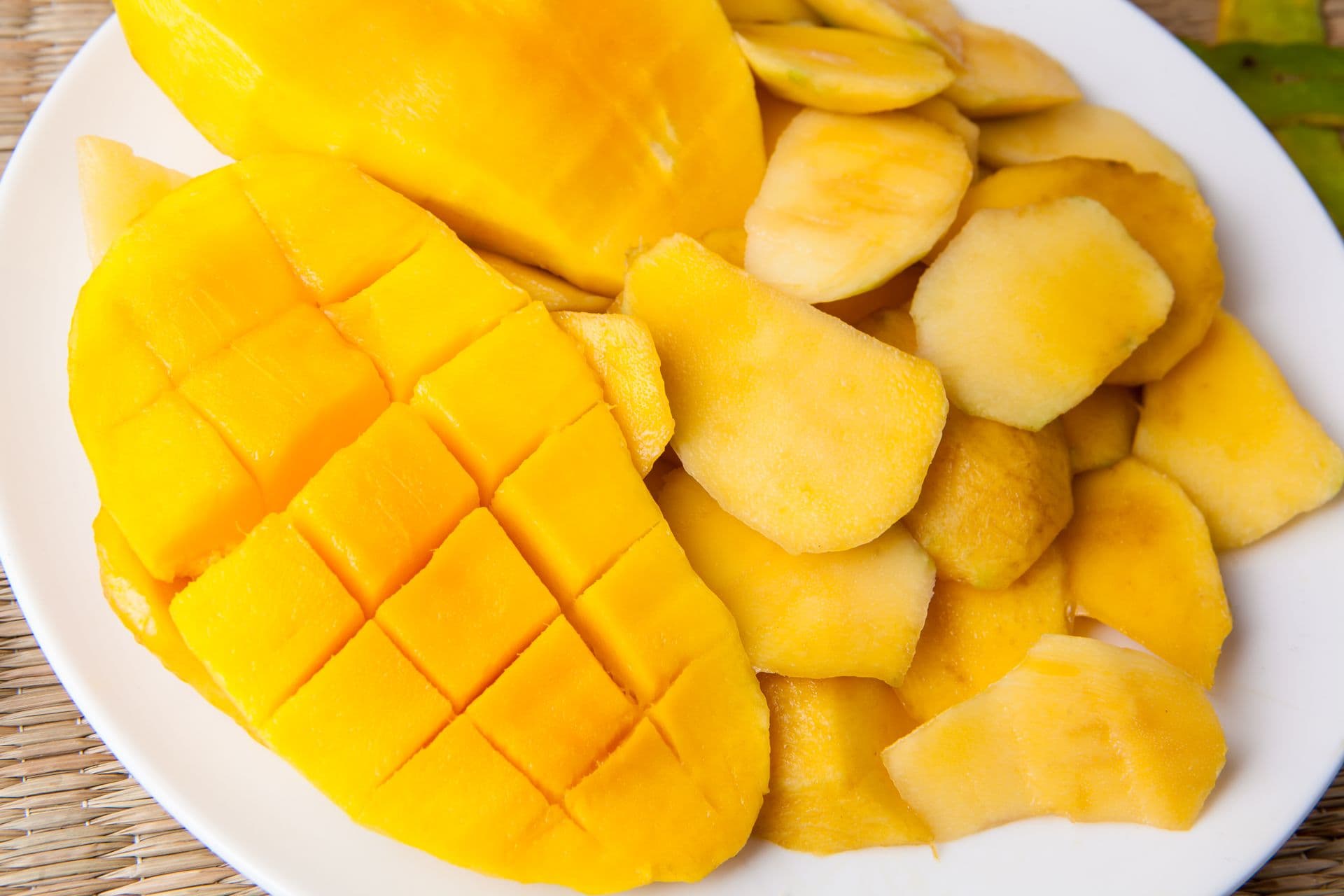
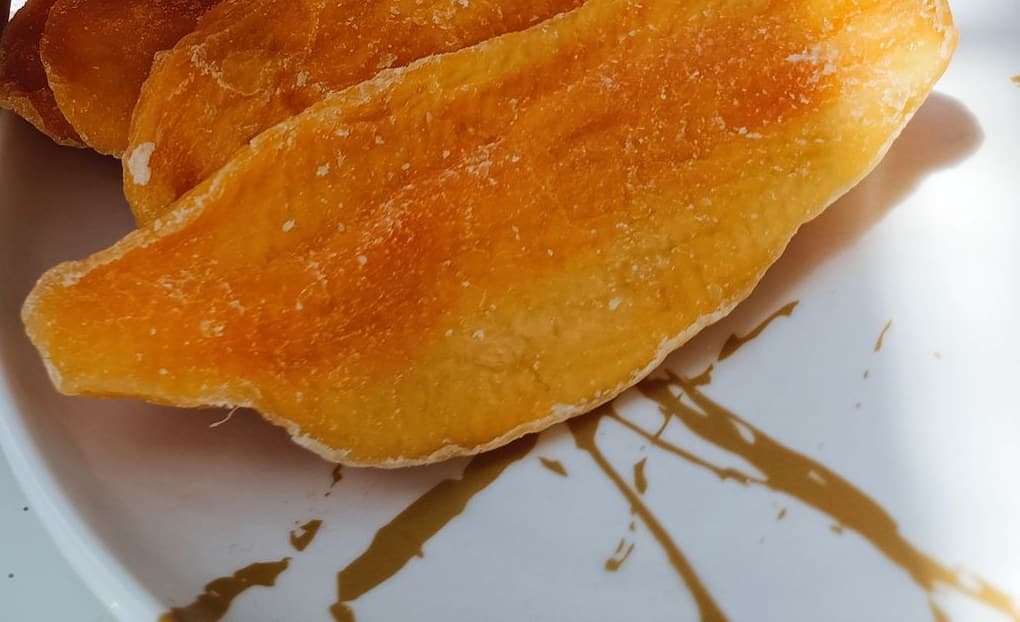
"Soft dried" and "low sugar" are trade names for two ways of making the same fruit. Soft dried slices are soaked in sugar syrup before drying, so they come out sweeter, softer and more moist. Low sugar slices take up much less sugar, or none, and come out firmer, drier and closer to the taste of fresh mango. On our catalog the soft grade carries up to 100 ppm SO₂ and the low sugar grade none. Neither name is a label claim. Below, the two grades are compared line by line, followed by what each means for labelling, shelf life and packing.
The two grades side by side
These are the figures on our catalog for soft dried mango slices and low sugar mango slices. Both come in the Standard tier and are quoted FOB Ho Chi Minh City (Cat Lai).
| Soft dried slices | Low sugar slices | |
|---|---|---|
| Moisture, maximum | 18% | 16% |
| Brix | 60-65 °Bx | 45-50 °Bx |
| SO₂, maximum | 100 ppm | 0 |
| Water activity, maximum | 0.65 | 0.60 |
| Texture | soft, bends without cracking | firmer, chewier |
| Taste | sweet, mango flavour in the background | fruit acid and mango flavour in front |
| Typical use | retail snack packs, bakery, trail mix | "better for you" snacks, muesli, bars |
Brix is a reading of dissolved solids, which in dried fruit means mostly sugar. Labs prepare dried fruit for a Brix reading in different ways, so if Brix goes into your contract, agree how it is measured. The catalog figures are a starting point. A buyer who needs a drier slice, a different cut or a set sugar range can ask for it in a quote request, and the figures are confirmed for the lot.
How each one is made
Both start the same way. Ripe mangoes are washed, peeled, the flesh is cut off the stone in slices, and the slices are dried on trays in hot air dryers until they reach the target moisture. The difference comes before the dryer.
For soft dried mango the slices sit in sugar syrup for several hours. Water moves out of the fruit and sugar moves in. This is called osmotic dehydration. A 2020 study at Nguyen Tat Thanh University on Keo mango, a Vietnamese variety grown in Long An, found that total sugar in the slices rose from about 23% to about 70% as the syrup went up to 50 °Brix, and stopped rising after about 9 hours of soaking. That sugar is what keeps the slice soft at 18% moisture: it binds water, so the fruit stays flexible without being wet enough for most microbes to grow. A little citric acid and sulphite are commonly added to the syrup to hold the bright colour.
Low sugar slices get a weaker syrup or none, and are dried further. With less sugar to hold water, the slice has to be drier to keep, which is why our low sugar grade has the lower moisture (16%) and the lower water activity (0.60). Without sulphite the colour is a little deeper and can darken sooner in storage.
Vietnam published a national standard for soft dried mango in 2025, TCVN 14304:2025, which sets requirements for the raw fruit, colour, texture and safety. Recipes still differ from one processor to the next. Before you write an ingredient list, ask for the exact recipe for your lot: whether sugar is added, which acid, and which additives. We confirm it in writing with the quote.
Illustration
Sulphites: the line on your label
Sulphur dioxide and sulphites (E 220 to E 228) keep dried mango from browning. They are allowed in the EU, with a limit for dried fruit such as mango of 500 mg/kg expressed as SO₂, under Regulation (EC) No 1333/2008. The soft grade, at up to 100 ppm (100 mg/kg), sits well inside that limit.
Labelling is a separate matter. Under the EU food information regulation (1169/2011), sulphites above 10 mg/kg as total SO₂ count as an allergen. They must be named in the ingredient list and highlighted, for example in bold. US rules use the same 10 ppm (10 mg/kg) line: above it, sulphites must be declared. So a soft dried lot with SO₂ anywhere between 10 and 100 ppm needs the sulphite declaration on the retail pack.
The low sugar grade is listed at 0 SO₂, which suits buyers who want a sulphite-free label. Have each lot tested before you print "no sulphites" or "unsulphured". If you sell into markets with their own additive lists, such as Japan, Korea or the Gulf states, check the rules there as well. Tell us the destination when you ask for a quote.
What you can say about sugar
This is where the Rotterdam pouch went wrong. "Low sugar" works as a grade name between importer and processor. On a consumer pack it is a regulated claim.
| Claim on the pack | EU (Regulation 1924/2006) | United States (21 CFR 101.60) |
|---|---|---|
| "Low sugar" | no more than 5 g sugars per 100 g | not defined as a claim |
| "Reduced sugar" | at least 30% less than a similar product, energy no higher | at least 25% less than a reference food |
| "No added sugar" | no added sugars or sweetening foods, and a note if sugars occur naturally | no sugar or sugar-containing ingredient added, plus other conditions |
Dried mango with no sugar added still has a lot of natural sugar, so "low sugar" is out of reach on an EU pack. "Reduced sugar" may work if a lab shows the slice has at least 30% less sugar than a comparable sweetened dried mango. "No added sugar" only works if the recipe adds none. Get a nutrition analysis for your lot and have your label adviser pick the wording. The trade name on the contract can stay "low sugar".
Moisture, water activity and shelf life
Moisture tells you how much water is in the slice. Water activity (aw) tells you how much of that water is free for microbes to use, and it matters more for shelf life. Most spoilage bacteria need an aw of about 0.90 or more. Moulds and yeasts can grow lower, and between 0.65 and 0.60 only a few moulds and sugar-tolerant yeasts are left, which stop at around 0.60.
Our low sugar grade, at 0.60 maximum, sits at that floor. The soft grade, at 0.65 maximum, is safe from bacteria but just inside the range where some moulds and sugar-tolerant yeasts can work slowly. It keeps well because of its sugar, its acid, its sulphite and a sealed pack, and slices that pick up moisture after opening will not keep as long.
Market studies put shelf life for conventional dried mango at 6 to 12 months. Sweetened slices sold in the trade are often given 12 months in sealed packs, and unsulphured fruit usually less. Store cartons cool and dry, out of the sun. The first sign of age is colour: bright yellow turns orange and then brown. The shelf life for your lot and packing is confirmed on the quote.
Packing and the container
Our catalog packs both grades in 10 kg cartons, and plans around 8 tonnes in a 20ft container and 16 tonnes in a 40ft. Retail pouches, other carton sizes, vacuum packing and the inner bag can be agreed per order, so say what you need in your quote request.
On customs codes, the product page lists 0804.50 (dried mangoes) and 2008.99 (fruit otherwise prepared or preserved, including with added sugar). Sugar-infused slices often fall under 2008.99 and slices with nothing added under 0804.50, but the customs office in your country decides. Confirm the code with your broker, or ask for binding tariff information, before the first shipment. The documents a lot travels with are covered in our guide to export documents from Vietnam.
Check a sample yourself
A free sample of each grade tells you more than a spec sheet. Five checks take ten minutes:
- Bend. A soft slice folds in half without cracking. A low sugar slice bends and springs back. A slice that snaps is too dry, and one that leaves your fingers wet is too moist.
- Look at the surface. Fine sugar crystals on soft slices are normal for infused fruit. Grey or fuzzy spots are mould. Note the colour against a white sheet of paper.
- Smell the opened bag. It should smell of mango. A sour, winey or yeasty smell means the fruit has started to ferment.
- Taste. Soft slices taste sweet first. Low sugar slices taste of fruit acid and mango. Write down what you like, so you can compare the shipment with it.
- Send part of it to a lab. Ask for moisture, water activity, SO₂ and total sugars. Those four numbers settle the contract lines and the label.
Keep part of the approved sample sealed and dated. When the container arrives, compare it with this reference before you sign off.
Which one should you buy?
Choose soft dried slices for a classic sweet snack, for bakery and for mixes where the fruit has to stay soft next to nuts or cereal. Choose low sugar slices if your customers read labels, if you want a sulphite-free ingredient list, or if the mango goes into bars and muesli that bring their own sweetness. Current prices for both grades are on the dried mango page.
Frequently asked questions
What is the difference between soft dried mango and low sugar dried mango?
Soft dried mango is soaked in sugar syrup before drying, so it is sweeter, softer and contains more moisture (up to 18% on our catalog). Low sugar mango takes up little or no added sugar, is dried further (up to 16% moisture) and tastes closer to fresh fruit.
Can I print "low sugar" on a pack of low sugar dried mango?
Not in the EU, where "low sugar" requires no more than 5 g of sugars per 100 g. Dried mango carries more than that from its own sugar. Depending on the recipe and a lab test, "reduced sugar" or "no added sugar" may fit. Your label adviser decides.
Does Vietnamese dried mango contain sulphites?
Our soft dried grade allows up to 100 ppm SO₂, which is within the EU limit of 500 mg/kg for dried fruit and above the 10 mg/kg line at which it must be declared on the label. Our low sugar grade is listed at 0 SO₂.
How long does dried mango keep?
Usually 6 to 12 months in a sealed pack, stored cool and dry. Sugar-infused slices with sulphite tend to keep their colour longer than unsulphured ones. The shelf life for your lot is confirmed on the quote.
Which HS code applies to dried mango?
0804.50 covers dried mangoes, and sugar-infused slices often go under 2008.99. Customs in the importing country makes the final call, so check with your broker before shipping.
Sources
- Regulation (EC) No 1333/2008 on food additives, Annex II (sulphur dioxide and sulphites, E 220 to E 228, in dried fruit)
- DECODE food additive database, Instituto Politécnico de Bragança, E 220 entry (maximum levels by dried fruit type, 500 mg/kg for other dried fruit)
- Regulation (EU) No 1169/2011 on food information to consumers, Annex II point 12 (sulphites above 10 mg/kg as an allergen)
- Regulation (EC) No 1924/2006 on nutrition and health claims, Annex (low sugars, reduced sugars, with no added sugars)
- European Commission, Nutrition claims
- US 21 CFR 101.60(c), sugar content claims
- US 21 CFR 101.100(a)(4), sulfiting agents at 10 ppm or more
- CBI (Centre for the Promotion of Imports from developing countries), Product characteristics for dried mangoes, 2014 (types, moisture ranges, shelf life, packing)
- Nguyễn Thị Thùy Dung, Đặng Thanh Thủy, Nguyễn Lê Tú Uyên, "Effect of sugar osmosis on total sugar and carotenoid content of soft dried mango", Tạp chí Công Thương, 28 January 2020
- Kansas State University Research and Extension, Water activity of foods, MF3674 (minimum water activity for bacteria, moulds and yeasts)
- US FDA, Inspection Technical Guide: Water activity (aw) in foods
- TCVN 14304:2025, Soft dried mango (xoài sấy dẻo), Vietnamese national standard, summary