Vietnam jasmine rice: 5%, 10% and 100% broken
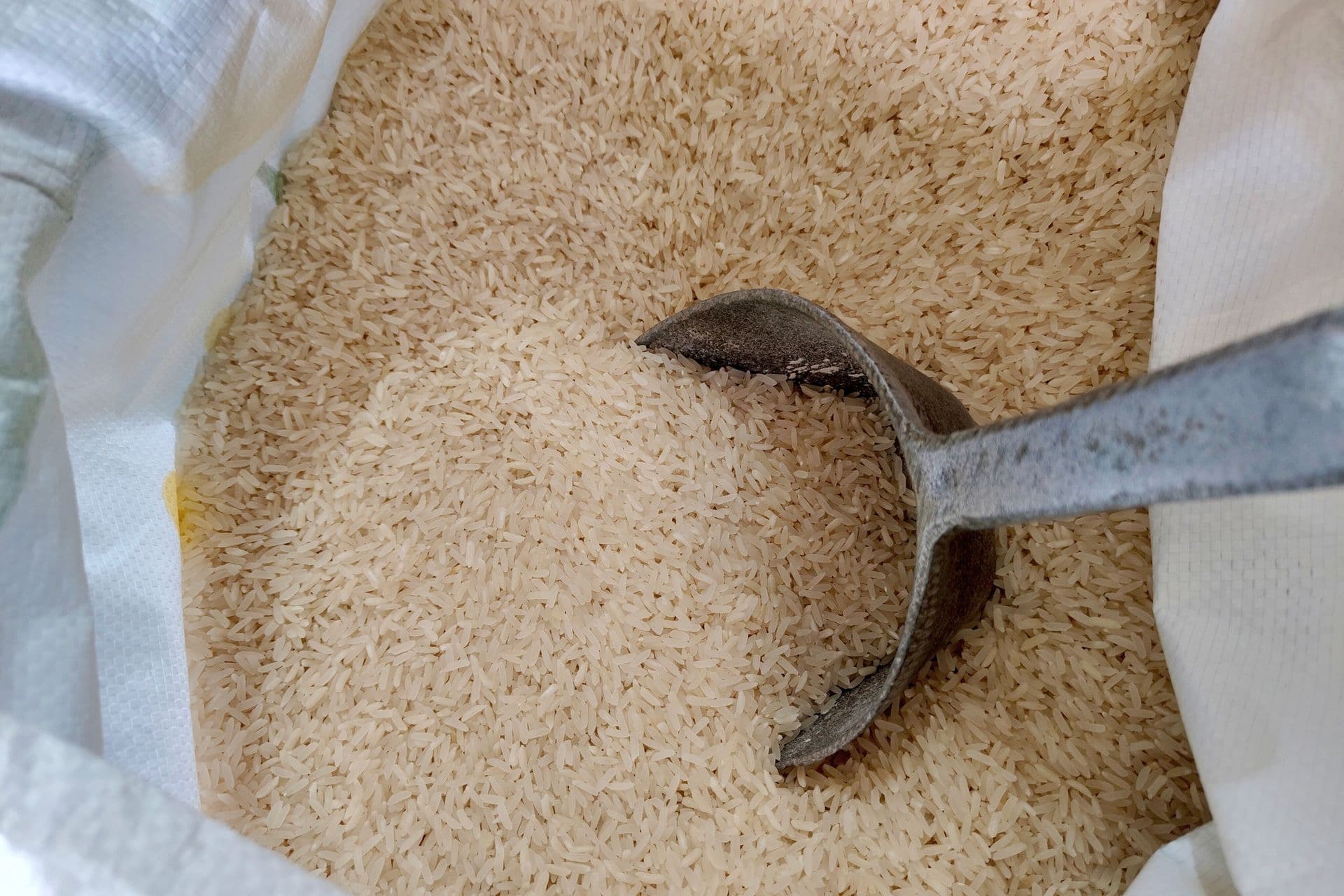
A wholesaler in Jeddah tips 100 g of a "jasmine rice 5% broken" sample onto a black tray and starts pulling out every short grain he can see. Twenty minutes later he has a pile of 9 g and an email half written to the seller. Then he lays a few of the "broken" grains next to a whole one. Many of them are only a little shorter, nipped at the tip. By the rule the rice trade uses, those still count as whole. Once he sorts again by that rule, the pile weighs 4 g. The lot is in spec.
The percentage in "5% broken" is the largest share of broken grains, by weight, that the rice may contain. B5 allows at most 5 g of brokens in every 100 g, B10 allows 10 g, and B100 is broken rice and nothing else. What counts as a broken grain is set by length, and that rule is the first thing to get right.
What counts as a broken grain
The Codex Alimentarius standard for rice (CXS 198-1995) and Vietnam's white rice standard TCVN 11888:2017 draw the line at three quarters. A grain at least three quarters as long as an average whole grain of the same rice is head rice and counts as whole. Anything shorter is a broken.
Codex splits the brokens further:
| Piece | Length compared with an average whole grain | Codex limit |
|---|---|---|
| Head rice | three quarters or more | counts as whole |
| Large broken | less than three quarters, more than one half | buyer preference |
| Medium broken | one half or less, more than one quarter | buyer preference |
| Small broken | one quarter or less, stays on a 1.4 mm round-hole sieve | buyer preference |
| Chips | pass through a 1.4 mm round-hole sieve | max 0.1% |
"Buyer preference" means Codex leaves the broken content to the contract, and the price follows the figure you choose. Fewer brokens mean more sorting at the mill, so B5 costs more than B10, and B100 is the cheapest of the three. The current offers are on our price board.
Two details from the Jeddah tray matter in every contract. The percentage is by weight, not by count, so ten tiny pieces weigh less than two large brokens. And the three-quarter rule is measured against the average whole grain of that lot. With a long jasmine grain, a piece that looks short at first glance can still be head rice.
B5, B10 and B100 on our board
Our jasmine rice comes from the Mekong Delta, is offered FOB Ho Chi Minh City (Cat Lai) and is listed in three grades, all in the Standard tier.
| Grade | Broken, max | Moisture, max | Grain length, min | Whiteness |
|---|---|---|---|---|
| B5, jasmine rice 5% broken | 5% | 14% | 7 mm | 38 |
| B10, jasmine rice 10% broken | 10% | 14% | 6.8 mm | 37 |
| B100, jasmine rice 100% broken | 100% | 14% | 3 mm | 35 |
The length line tells you how the grades differ besides breakage. B5 asks for a grain of at least 7 mm, comfortably long grain under the Codex option that puts the line at 6.6 mm. B10 allows a slightly shorter grain. For B100 the 3 mm minimum keeps fine pieces and dust out of a lot that is all brokens. The whiteness figure is a reading on a rice whiteness meter and falls a point or two as the grade goes down. If your buyer works to a particular meter or a target reading, write it in your quote request and we will confirm it for your lot.
These are our general limits. Rice is traded on its specification, so most lines can be agreed per order, for example a lower moisture for a long voyage or a tighter cap on chalky grains.
Chalky grains: the defect you see against the light
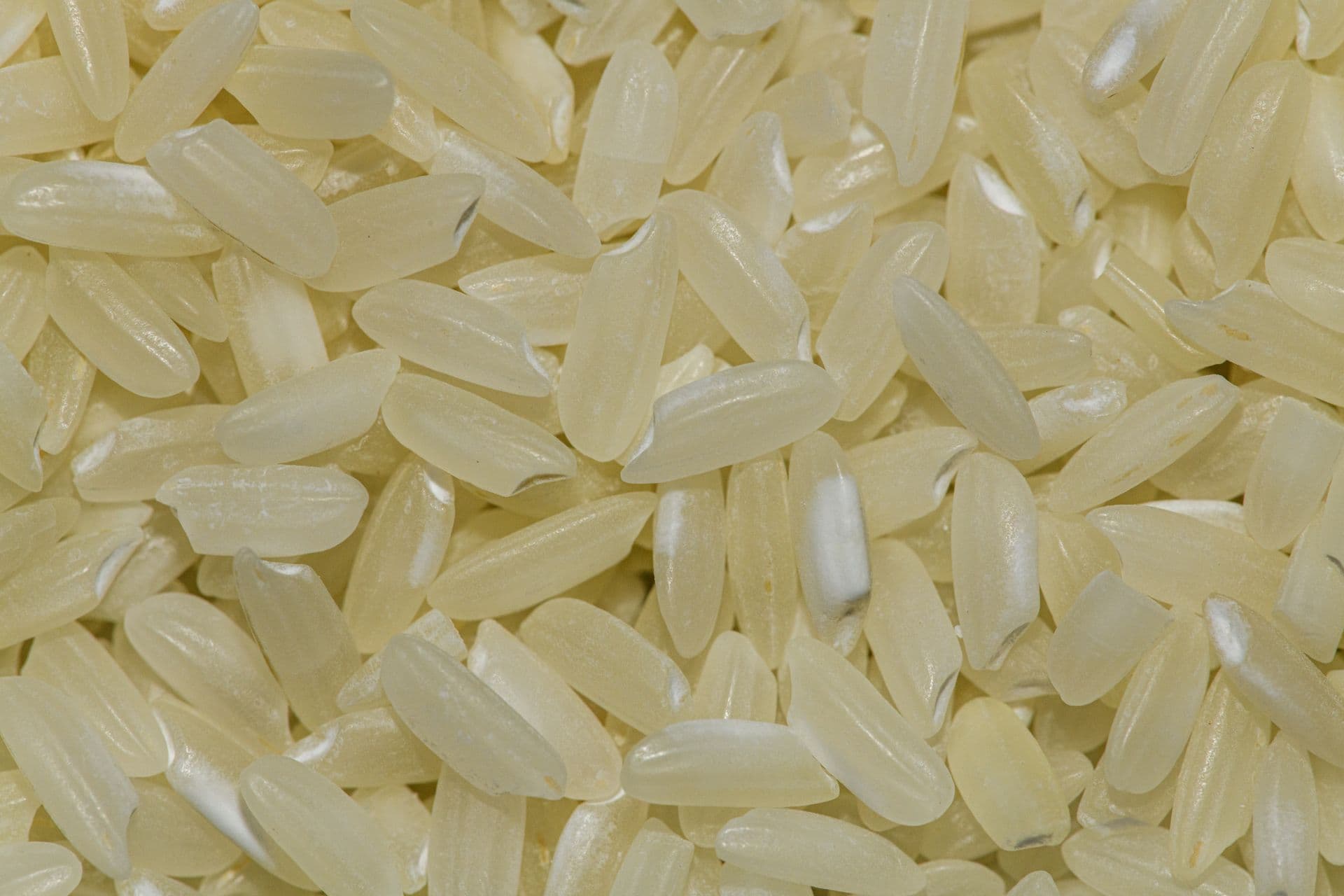
A jasmine grain should be translucent, like frosted glass. A chalky grain has an opaque, floury patch, usually on the belly or in the centre. It cooks softer, breaks more easily in the mill and makes a lot look dull.
The two standards set the line in different places. Codex counts a grain as chalky when at least three quarters of its surface is opaque, and sets a maximum of 11% by weight for milled rice. TCVN 11888:2017 counts a grain as chalky from half its surface. A lot can therefore pass Codex and fail on the Vietnamese definition. Write the chalky limit and the definition you want in your quote request, and we will confirm it for your lot.
Illustration
Codex also lists other defective kernels for milled rice: heat-damaged (yellowed) grains up to 3%, damaged grains up to 3%, immature grains up to 2%, red grains up to 4% and red-streaked grains up to 8%. If one of these matters to your market, put the figure in the contract next to the broken percentage.
Moisture: 14% and what it means at sea
All three of our grades carry a moisture maximum of 14%. Codex allows up to 15% and asks for lower limits where the climate, the voyage or the storage time call for them. A container of rice crossing the equator is that case. Rice gives off moisture in a warm box, the moisture condenses under the roof when the air cools at night, and drips back onto the top bags.
If your shipment will spend many weeks at sea or sit in a hot port, ask for a lower figure or for the container to be lined with paper and fitted with desiccant bags. Both are common requests and can be agreed per order.
Varieties: Jasmine 85, KDM and the ST rices
On a Vietnamese offer, "jasmine" is a trade name for fragrant long grain rice and can cover several varieties. The aroma comes from 2-acetyl-1-pyrroline (2AP), the same compound that gives pandan leaves their smell. Vietnam's fragrant rice standard TCVN 11889:2017 describes the aroma as natural and dependent on the variety and on how long the rice has been stored. New crop smells strongest.
| Name you will see | What it is |
|---|---|
| Jasmine 85 | Aromatic long grain line developed with IRRI and released in Texas in 1989, long grown in the Mekong Delta for export. One of the nine Vietnamese fragrant varieties that fall under the EU's duty-free fragrant rice quota in the EVFTA |
| KDM | Trade short form of Khao Dawk Mali, the Thai Hom Mali type, offered by some Vietnamese millers |
| ST24, ST25 | Fragrant varieties bred in Soc Trang province. ST25 was named World's Best Rice in 2019 and again in 2023 |
| Dai Thom 8 (DT8) and others | Fragrant varieties widely planted in the Delta and traded alongside Jasmine 85 |
Varieties differ in grain length, softness after cooking and price, and some lots are blends. If your market cares which variety is in the bag, name it in your quote request and we will confirm what the lot is milled from. The same applies to the EVFTA quota: it covers named varieties, so a buyer in the EU who wants to use it needs the variety stated on the documents.
Packing and loading
Our catalog packs jasmine rice in 25 kg PP bags. Rice is heavy for its volume, so a container reaches its weight limit before it is full. We plan on about 25 tonnes in a 20ft container and about 27 tonnes in a 40ft. Retail packs and other bag sizes can be discussed per order.
The documents that usually travel with a rice shipment, including the phytosanitary certificate, are covered in the guide to export documents from Vietnam. How the price changes between FOB, CFR and CIF is in the guide to Incoterms for buying from Vietnam.
Which grade for which use
| Grade | Typical buyers | Why |
|---|---|---|
| B5 | supermarkets, retail packers, restaurants | long whole grains, best look in the pot and on the plate |
| B10 | wholesalers, food service, price-led retail | close to B5 in the bowl, at a lower price |
| B100 | rice flour mills, noodle and snack makers, brewers, markets that cook with brokens | price per tonne, and a grain shape that does not matter once milled or cooked down |
Broken rice has buyers of its own. It is milled into rice flour for noodles, crackers and gluten-free baking, used by brewers as an adjunct, and cooked as a staple in its own right. In Vietnam, com tam (literally "broken rice") is a dish people order by name. In Senegal, 100% broken rice makes up about 98% of rice imports, bought for its price and because households prefer it.
Check a sample yourself
The test from the Jeddah tray takes half an hour and a kitchen scale that reads to 0.1 g.
- Mix rice from several bags, then weigh out 100 g.
- Pick ten grains that look whole and measure them with a ruler or calipers. Their average is your whole-grain length.
- Sort out every piece shorter than three quarters of that length and weigh the pile. That weight in grams is your broken percentage.
- From the whole grains, hold a handful against a window or a lamp and pick out those with an opaque floury patch. Weigh them for chalky grains, and note which definition you used.
- Look for yellow, red-streaked and damaged grains, husk, paddy and stones.
- Smell the rice straight from a freshly opened bag. Fragrant rice should smell of pandan or popcorn, not of must or dust.
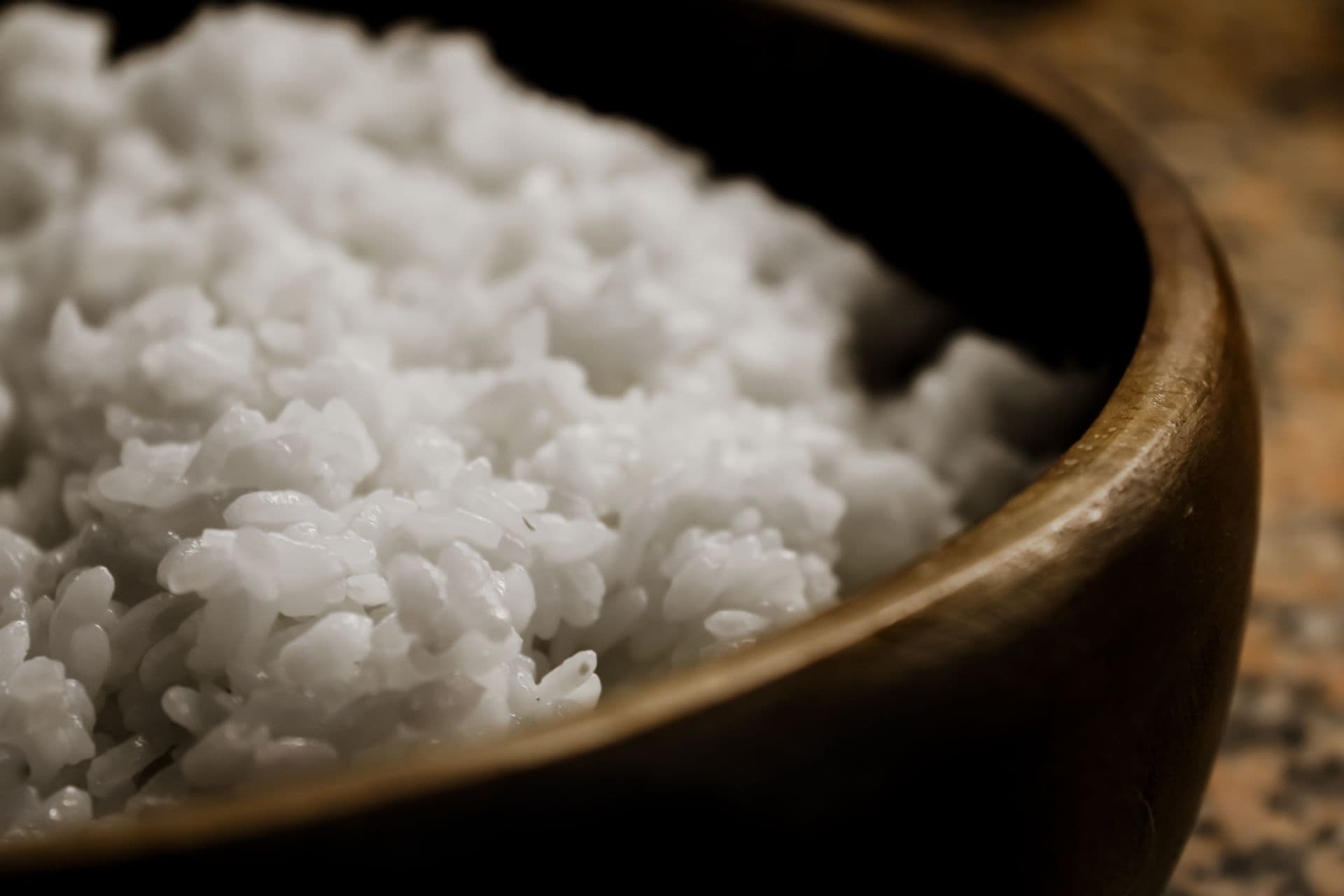
- Cook 200 g with the water you would normally use. Check the aroma as the lid comes off, then the texture warm and again after the rice has cooled.
Illustration
Moisture needs a meter or a lab. To run this check on our rice, request a free sample of up to three grades.
Frequently asked questions
Does 5% broken mean 5% of the grains are broken?
It means brokens make up at most 5% of the weight. A broken is a piece shorter than three quarters of an average whole grain of the same lot. Counting grains instead of weighing them gives a different and usually higher figure.
What is 100% broken rice used for?
Rice flour, rice noodles, crackers and snacks, brewing, and cooking as a staple in markets that prefer it, such as Senegal. Our B100 has a minimum piece length of 3 mm, which keeps fine pieces and dust out.
What moisture should jasmine rice have for export?
Our three grades are sold at a maximum of 14%. Codex allows up to 15% and recommends lower limits for hot climates and long voyages, so a lower figure can be agreed for a long route.
Which variety is Vietnamese jasmine rice?
Jasmine is a trade name for fragrant long grain rice. Jasmine 85 is the classic export variety, and KDM and the ST rices are also traded. Name the variety you need in your quote request so it is written on the contract.
Sources
- Codex Alimentarius, Standard for Rice, CXS 198-1995: definitions of head rice, broken kernels and chips, chalky kernels and defect limits, moisture 15% max, grain length classes
- TCVN 11888:2017, Gạo trắng (white rice), summary with definitions of broken rice, head rice and chalky kernels, and the grade list
- TCVN 11889:2017, Gạo thơm trắng (aromatic white rice), scope and definition of aromatic rice
- USDA ARS GRIN-Global, accession record for Jasmine 85, developed with IRRI and released in Texas in 1989
- VOV, nine Vietnamese rice varieties under the EU tariff quota, including Jasmine 85
- Vietnam Government News, ST25 named World's Best Rice 2023
- Vietnam Agriculture (Nong Nghiep), ST24 and ST25 exports alongside Jasmine 85 and DT8
- Gujral et al., Journal of Food Science and Technology (2019), uses of broken rice including brewing adjunct and rice flour
- Vietstock, Senegal suspends rice imports for one month (December 2025), 100% broken rice at 98% of Senegal's rice imports
- USDA Foreign Agricultural Service, Senegal Grain and Feed Annual, broken rice in Senegal's imports