Cassia vs Ceylon cinnamon: a guide for importers
A spice importer in Rotterdam gets two enquiries in the same week. A bakery chain wants "the strongest cinnamon you can find" for its Christmas biscuits. A maker of children's porridge wants "cinnamon with a coumarin certificate". The importer has one bag of Vietnamese cassia in the warehouse. It suits the first customer well and could put the second one in breach of EU law.
Cassia and Ceylon cinnamon are different species. Ceylon, or true cinnamon, is Cinnamomum verum (also called C. zeylanicum) from Sri Lanka. Cassia covers several species, and Vietnamese cassia is Cinnamomum loureiroi, sold as Saigon cinnamon. Cassia has a stronger, hotter taste and costs less. It also contains far more coumarin, a natural compound that EU law caps in finished foods. Ceylon is milder, sweeter and much more expensive, with almost no coumarin. The right choice depends on the customer, the recipe and the label.
The two barks side by side
| Vietnamese cassia | Ceylon cinnamon | |
|---|---|---|
| Species | Cinnamomum loureiroi | Cinnamomum verum (C. zeylanicum) |
| Main origin | Vietnam, especially Yen Bai and Quang Nam | Sri Lanka |
| Trade names | Vietnamese cassia, Saigon cinnamon | Ceylon cinnamon, true cinnamon |
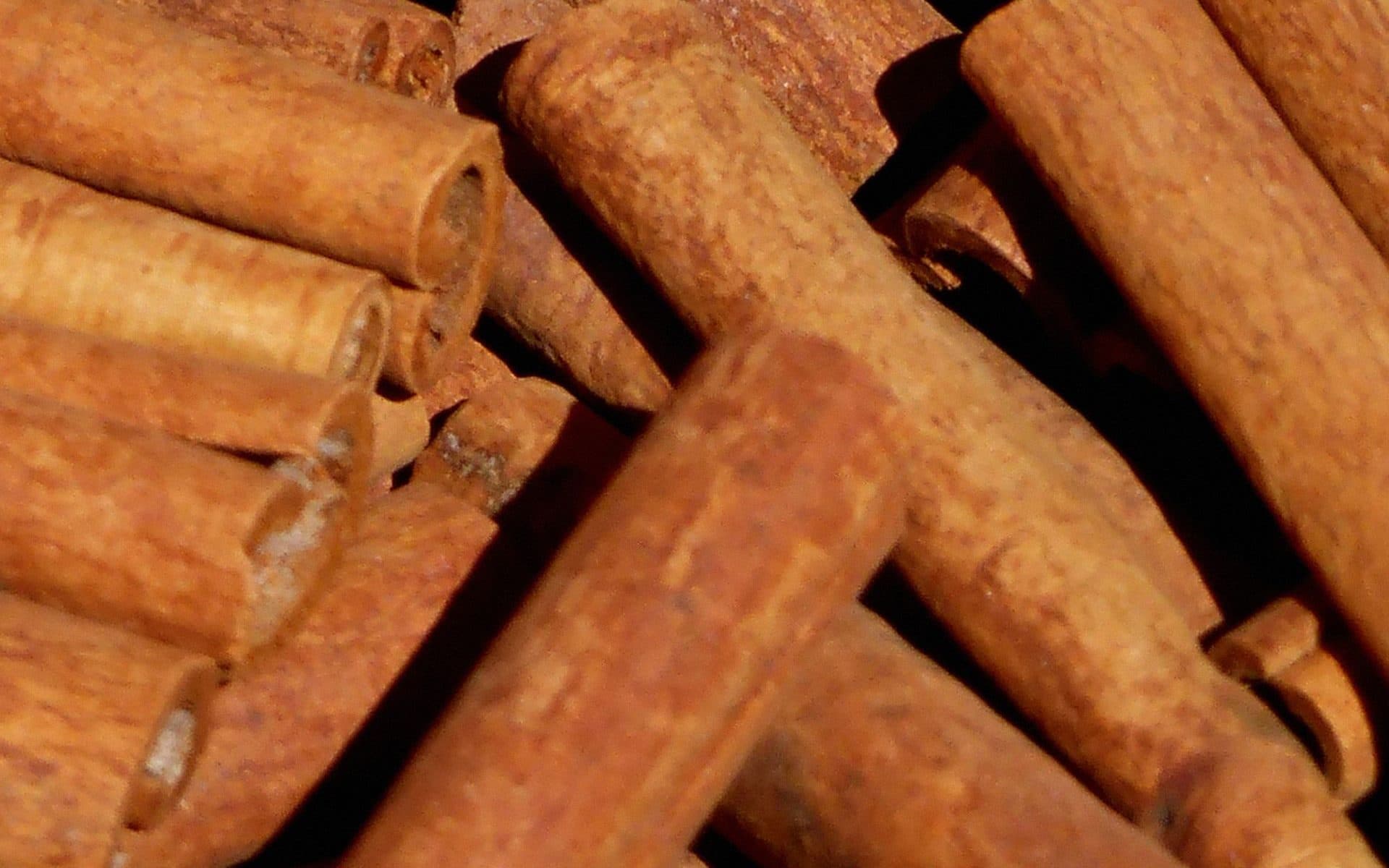
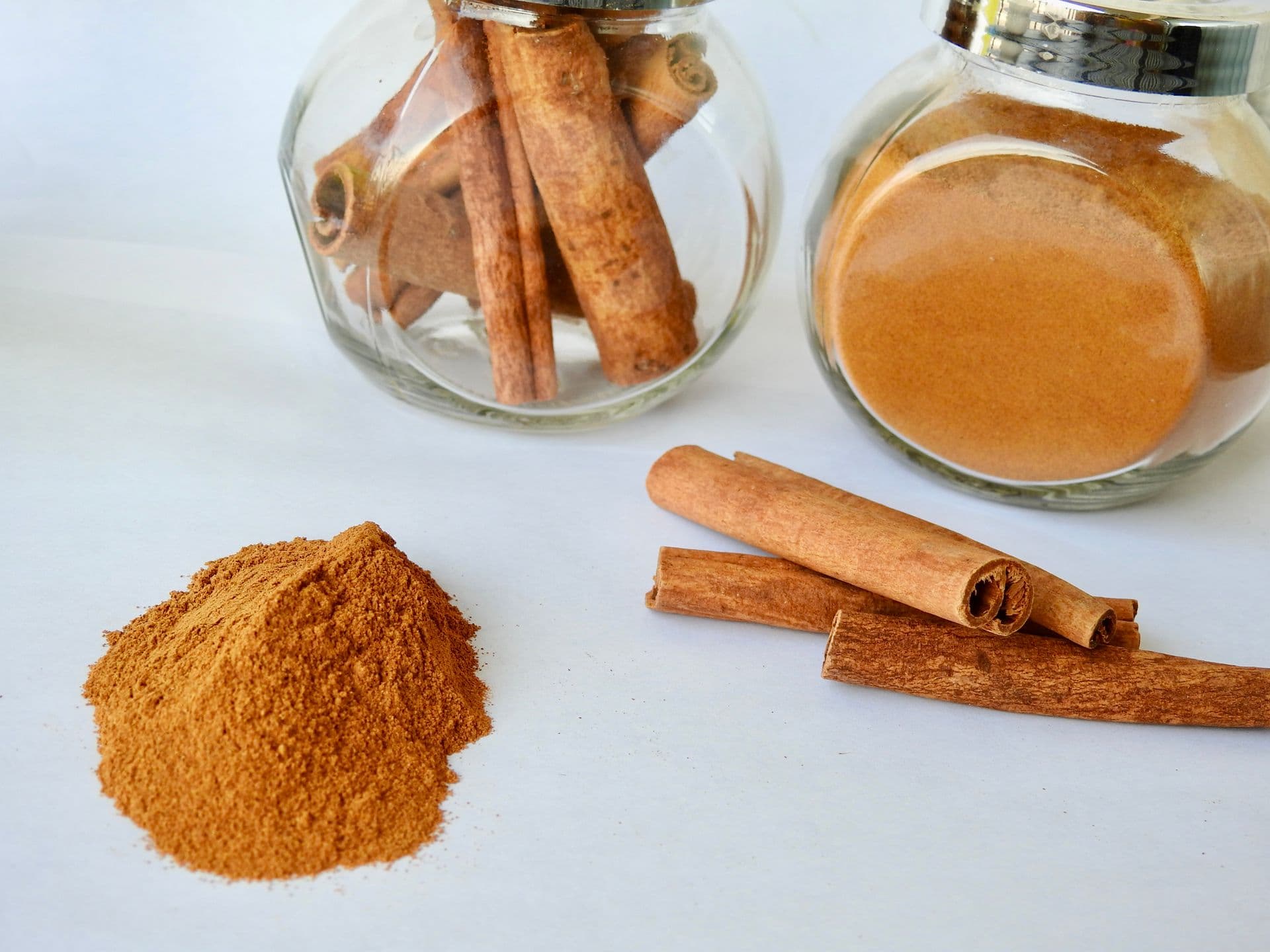
| Stick | one thick layer of bark curled inward, hollow in the middle | many thin, papery layers rolled like a cigar |
| Colour | reddish dark brown | light brown |
| Flavour | strong, hot, slightly bitter, with a burning finish | soft, sweet, delicate |
| Coumarin | high, and it varies a lot from lot to lot | trace amounts |
| HS code | 0906.19 | 0906.11 |
| Price position | below Ceylon | two to three times the price of cassia |
For the price row, CBI, the Dutch import promotion centre, found Sri Lankan Ceylon selling at nearly three times the average price of Indonesian cassia in 2022, and the EU's Joint Research Centre (JRC) put it at about twice the price of cassia in 2025. For current offers on our cassia, see the price board.
Species: why "cinnamon" can mean four plants
The trade buys four main barks under the word cinnamon. Ceylon (C. verum) is the only one botanists call true cinnamon. The other three are cassia: Chinese cassia (C. cassia), Indonesian cassia (C. burmannii, often called Korintje) and Vietnamese cassia (C. loureiroi).
CBI notes that Vietnamese cassia has the highest essential oil content of the cassia types and the most pronounced flavour, and it places it in the high-end segment of the European market next to good Ceylon. Indonesian cassia is the volume product of the food industry.
The three forms we offer, split, 8 cm stick and broken, with their length, oil and moisture figures, are covered in the guide to Vietnamese cassia split, stick and broken.
Flavour: hot and loud, or soft and sweet
Cinnamaldehyde gives both barks their smell. Ceylon bark oil also carries eugenol and linalool, which give it a sweeter, softer finish, while cassia tastes of cinnamaldehyde and heat. Where the spice has to come through sugar and fat, as in a cinnamon roll or a spiced biscuit, cassia holds up better. Ceylon suits a custard or a tea where the spice should stay in the background.
The Sri Lankan board notes that Ceylon is the usual choice in parts of Europe, Western Asia and Oceania, while cassia dominates in Canada and the USA. Before you switch a product from one to the other, give your customer a tasting.
Illustration
Coumarin: the number that decides the recipe
Germany's Federal Institute for Risk Assessment (BfR) and the European Food Safety Authority set a tolerable daily intake of 0.1 mg per kg of body weight. That is 6 mg a day for a 60 kg adult. BfR reports that cassia averages about 3,000 mg of coumarin per kg, with the highest values near 10,000 mg/kg. At the average level a 60 kg adult reaches the daily limit with about 2 g of cassia a day, and a 15 kg child with about 0.5 g.
A review of published data in the journal Foods lists authentic Ceylon bark at 17 mg/kg. The same review lists an authenticated sample of Vietnamese cassia (C. loureiroi) at 6,970 mg/kg and commercial Vietnamese bark at 1,060 mg/kg. Lots can differ several times over, so a coumarin figure belongs to one lot, never to "Vietnamese cassia" as a whole.
What EU law limits
EU law sets no maximum for coumarin in cinnamon sold as a spice. The limits apply to compound foods that contain it, under Annex III of Regulation (EC) No 1334/2008, and have applied since January 2011:
| Food | EU maximum coumarin | Max cassia per kg of food at 3,000 mg/kg coumarin | Max cassia at 7,000 mg/kg |
|---|---|---|---|
| Traditional or seasonal bakery ware with a reference to cinnamon in the labelling | 50 mg/kg | 16.7 g | 7.1 g |
| Breakfast cereals, including muesli | 20 mg/kg | 6.7 g | 2.9 g |
| Fine bakery ware, other than the line above | 15 mg/kg | 5.0 g | 2.1 g |
| Desserts | 5 mg/kg | 1.7 g | 0.7 g |
The last two columns divide the limit by the coumarin in the bark and assume all of it stays in the food, so use them for planning only. They explain the porridge maker's request: with cassia, a cereal or dessert can pass or fail depending on the lot. Ceylon at around 17 mg/kg cannot push any of these foods over the limit.
A Christmas biscuit gets the 50 mg/kg limit only when its label refers to cinnamon. Without that reference it falls under fine bakery ware at 15 mg/kg, so check label and recipe together.
Coumarin at the border
CBI warns that bulk cinnamon with very high coumarin can be rejected at the EU border, and coumarin has appeared in EU food safety alerts (RASFF). In 2025 the JRC tested 104 cinnamon samples from shops in 10 EU countries, the UK, Serbia and Sri Lanka. More than 66% failed quality standards or EU food law, were suspected of fraud or may have exceeded the coumarin limits. Up to 9% of the samples sold as Ceylon were partly or wholly cassia, and 31 had coumarin levels the JRC considered potentially harmful for children.
Coumarin changes from lot to lot, so it is confirmed per lot. If coumarin matters for your recipe or your customer, say so in your quote request and we will confirm the testing that can be arranged for your lot before you sign.
Labelling: what you may call it
In the EU, cassia may never be sold as "Ceylon". Since February 2022, "Ceylon cinnamon" has been a protected geographical indication (PGI), registered by Commission Implementing Regulation (EU) 2022/144, so the name belongs to bark from Sri Lanka made to its specification. EU food law also requires that food information must not mislead the buyer about the nature or origin of the food (Regulation (EU) No 1169/2011, Article 7).
Beyond that, the rules differ by market:
- In the European Union, no general rule forces a pack to name the species, and many packs only say "cinnamon". Names such as "cassia", "cassia cinnamon" or "Vietnamese cinnamon" tell the shopper more.
- In the United States, the FDA's spice definitions (Compliance Policy Guide Sec. 525.750) list "Cinnamon (Cassia)" as one spice covering C. zeylanicum, C. cassia and C. loureirii (Saigon cinnamon). In US retail, cassia is normally sold simply as cinnamon.
- For customs, the HS code follows the species. Ceylon (C. zeylanicum) sits under 0906.11, Vietnamese cassia under 0906.19, and ground cinnamon of either kind under 0906.20.
Check the final wording with your food law adviser, and tell us in your quote request how the species and origin should read on the commercial invoice, so we can confirm it for your lot.
Illustration
Which bark for which customer
| Customer or product | Usual choice | Why |
|---|---|---|
| Industrial bakery, spiced biscuits, cinnamon rolls | Vietnamese cassia | strong flavour per gram, lower cost, check coumarin against the EU limit |
| Spice grinder for retail powder | cassia for the mass market, Ceylon for a premium line | price, and the taste the shopper expects |
| Children's food, desserts, breakfast cereals | Ceylon, or cassia from a lot with a tested low coumarin figure | tight EU limits of 5 to 20 mg/kg |
| Mulled wine, chai, hot drinks | 8 cm cassia stick | stands up to heat and long steeping |
| Premium retail jar, gift pack | either, labelled clearly | Ceylon for the "true cinnamon" story, Saigon cinnamon for the strongest taste |
| Food supplements | ask your regulator first | supplement rules differ from the food limits above |
Ceylon is graded by quill diameter (Alba, Continental, Mexican, Hamburg), a system unrelated to cassia grades, so an Alba quote cannot be compared line by line with one for 8 cm cassia sticks.
Check a sample yourself
Whole sticks take a minute to tell apart. Powder is harder.
- Look at the cut end. Cassia is one thick layer, curled into a hollow tube or a double scroll. Ceylon is a stack of thin layers, rolled tight like a cigar.
- Snap it. Cassia is hard and woody and needs real pressure. Ceylon crumbles in the fingers.
- Compare colour in daylight. Cassia is reddish dark brown, Ceylon pale tan.
- Taste a small piece. Cassia bites, burns a little and can taste bitter. Ceylon is sweet and gentle.
- Send powder to a lab. Ground cassia and ground Ceylon look much the same, but a coumarin test (usually HPLC) separates them: Ceylon shows traces, cassia hundreds or thousands of mg/kg. Ask for it on every lot meant for desserts, cereals or children's food.
To get Vietnamese cassia in your hands first, request a free sample. All three forms are on the Vietnamese cassia page: split, 8 cm stick and broken.
On our orders the factory is the seller named on the contract and the invoice, and you pay the factory directly. Luason is the factory's authorised sales agent. Goods leave from Ho Chi Minh City (Cat Lai) on FOB terms.
Frequently asked questions
Is Vietnamese cassia real cinnamon?
It counts as cinnamon in trade and under the US FDA spice definitions. Botanists keep the name "true cinnamon" for Ceylon, Cinnamomum verum. Vietnamese cassia is Cinnamomum loureiroi, also sold as Saigon cinnamon.
How much coumarin is in cassia compared with Ceylon cinnamon?
BfR reports about 3,000 mg/kg on average for cassia, with peaks near 10,000 mg/kg, against about 17 mg/kg for authentic Ceylon bark. Vietnamese cassia varies widely, so test each lot.
What are the EU coumarin limits for foods with cinnamon?
Regulation (EC) No 1334/2008 sets 50 mg/kg for traditional or seasonal bakery ware that refers to cinnamon on the label, 20 mg/kg for breakfast cereals, 15 mg/kg for other fine bakery ware and 5 mg/kg for desserts. There is no limit for cinnamon sold as a spice.
Can I label Vietnamese cassia as Ceylon cinnamon?
No. "Ceylon cinnamon" is a protected geographical indication in the EU since 2022, and EU food law forbids misleading names. Use "cassia", "cassia cinnamon", "Saigon cinnamon" or "Vietnamese cinnamon", as the law of your market allows.
Why is Ceylon cinnamon more expensive than cassia?
Ceylon quills are rolled by hand, a skill the Sri Lankan export board describes as handed down through generations, and Ceylon is traded in much smaller quantities than cassia. CBI found Ceylon selling at nearly three times the price of Indonesian cassia in 2022.
Sources
- Sri Lanka Export Development Board, "Difference between Cassia and Ceylon cinnamon", 5 August 2021, appearance, flavour, bark oil components, markets
- Sri Lanka Export Development Board, "Cinnamon cultivation in Sri Lanka", quill grades Alba, Continental, Mexican and Hamburg
- CBI (Netherlands Ministry of Foreign Affairs), "Entering the European market for cinnamon", species, market segments, coumarin and border rejections, 2022 export prices
- Federal Institute for Risk Assessment (BfR), "FAQ on coumarin in cinnamon and other foods", tolerable daily intake, coumarin in cassia, EU limits
- Lončar M. et al., "Coumarins in Food and Methods of Their Determination", Foods 2020, 9(5):645, coumarin by species, EU limits, analytical methods
- Regulation (EC) No 1334/2008 on flavourings, Annex III
- Regulation (EU) No 1169/2011 on food information to consumers, Article 7
- Commission Implementing Regulation (EU) 2022/144, Ceylon cinnamon (PGI)
- European Commission Joint Research Centre, "Commission finds fraud and potential safety issues in cinnamon on the EU market", 24 September 2025
- US Food and Drug Administration, CPG Sec. 525.750 Spices, Definitions
- Australian Border Force, Customs Tariff Schedule 3, chapter 9, subheadings 0906.11, 0906.19 and 0906.20