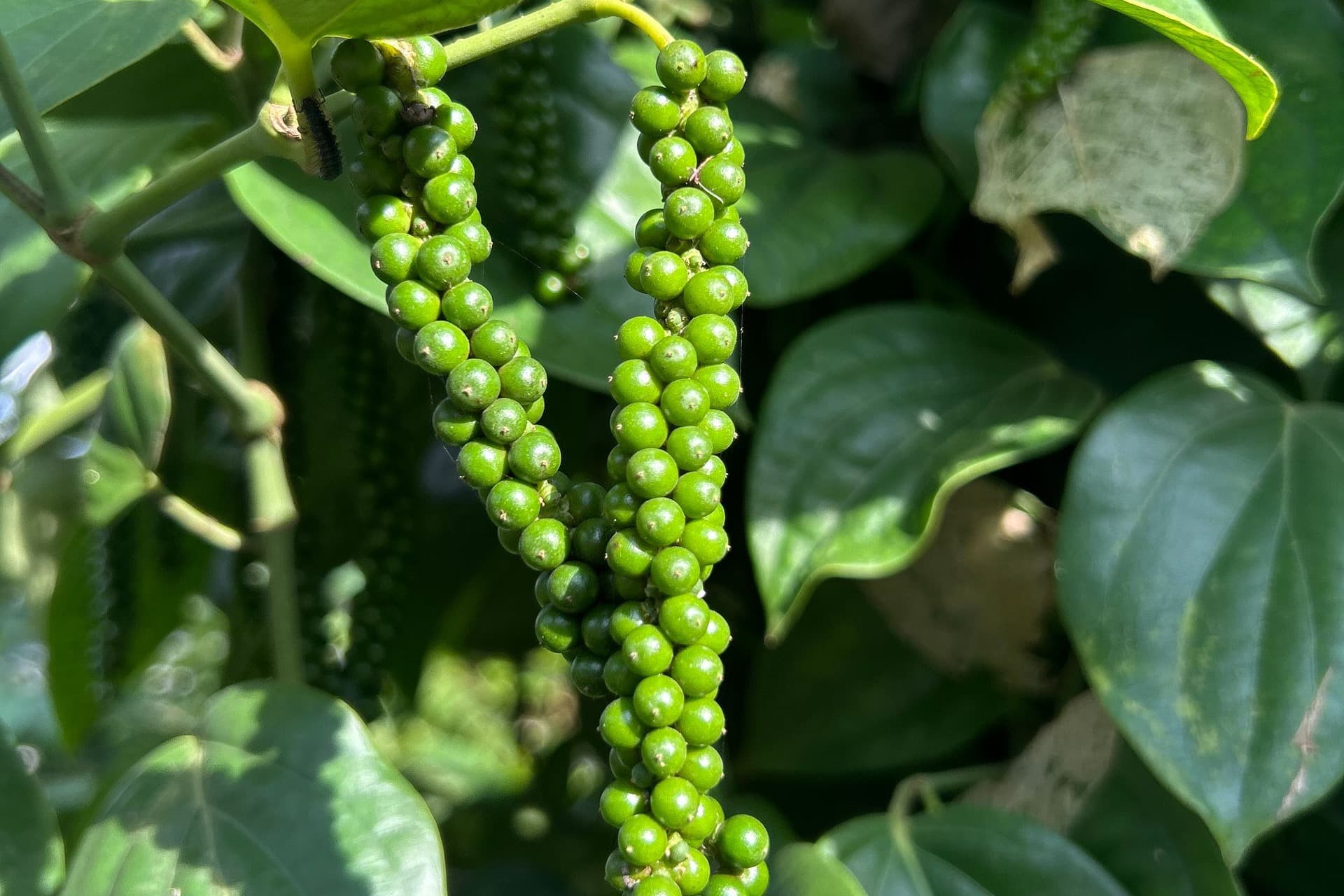
Black pepper 500, 550 and 570 g/l explained
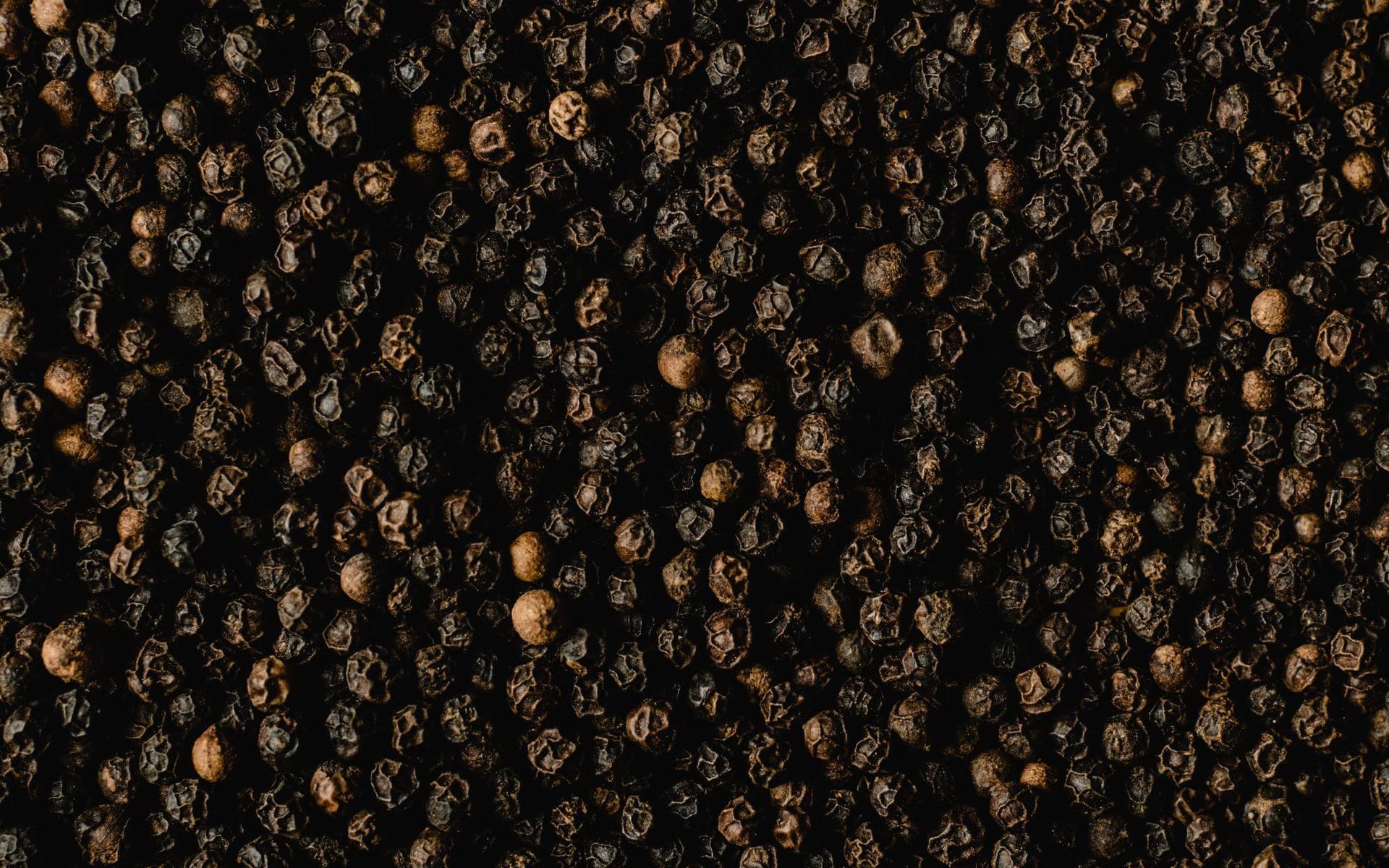
A spice grinder in Rotterdam has two offers for "Vietnam black pepper 550 g/l" on her desk. The descriptions match, but the prices don't. The small print explains it: one lot is FAQ, the other ASTA. A litre of either weighs the same, but the FAQ bag can hold more stems, dust and stones.
The g/l figure is bulk density, the weight of one litre of whole peppercorns. A higher figure means heavier, better-filled berries and fewer hollow ones, so 570 g/l is a denser selection than 500 g/l. Density says nothing about how clean the pepper is, though. Cleanliness is covered by the second label, FAQ or ASTA, and by limits for moisture and admixture. This guide covers both halves of the description and the figures that go into a contract.
What the g/l number measures
Pour peppercorns into a one-litre measure, level the top and weigh it. That weight in grams is the bulk density. ISO 959-1, the international specification for black pepper, defines the measurement in an annex, and the Vietnamese national standard TCVN 7036:2008 uses it to sort pepper into classes.
Density goes down when a lot holds many light berries and pinheads. ISO 959-1 defines a light berry as a berry that looks normally developed but has no kernel inside, and a pinhead as a very small berry that never developed. Both weigh little and take up space, so they pull the litre weight down. The Dutch import promotion agency CBI puts good black pepper generally at 500 to 600 g/l.
Don't read density as a flavour score. ISO 959-1 points out that the look of a berry has no direct link to its taste, and smaller berries can be more aromatic than larger ones. Flavour is measured as volatile oil and piperine, covered further down.
The three grades on our price board
Our catalog lists three densities of Vietnamese whole black pepper, each with maximums for moisture, admixture (foreign matter such as stems, dust and stones) and light berries. In the trade, a g/l figure in a grade name is read as a minimum.
| Grade | Density | Moisture, max | Admixture, max | Light berries, max | Offered as |
|---|---|---|---|---|---|
| G500 | 500 g/l | 13.5% | 1% | 5% | FAQ |
| G550 | 550 g/l | 13% | 0.5% | 3% | FAQ or ASTA |
| G570 | 570 g/l | 12.5% | 0.2% | 2% | ASTA |
As density rises, every limit tightens: less water, less foreign matter, fewer hollow berries. G570 differs from G500 on all four lines of the table, so the 70 grams in the litre are only part of the gap. The packing on our catalog is a 25 kg PP bag, and the HS code for whole black pepper is 0904.11. Current offers for each grade and standard are on the price board.
How the grades compare with ISO and TCVN
TCVN 7036:2008 divides non-processed and semi-processed black pepper into four classes by density and sets a separate column for processed pepper, meaning pepper cleaned and graded in Vietnam before export.
| TCVN 7036:2008 class | Density, min | Light berries, max | Foreign matter, max | Pinheads or broken, max |
|---|---|---|---|---|
| Special | 600 g/l | 2% | 0.2% | 2% |
| Grade 1 | 550 g/l | 6% | 0.5% | 2% |
| Grade 2 | 500 g/l | 10% | 1% | 4% |
| Grade 3 | 450 g/l | 18% | 1% | 4% |
| Processed (P) | 600 g/l | 2% | 0.2% | 1% |
The same standard caps moisture at 13% for non-processed and semi-processed pepper and 12.5% for processed pepper. It also sets at least 2.0 ml/100 g of volatile oil and 4% piperine on a dry basis. ISO 959-1:1998 is looser on the physical side. It asks for at least 450 g/l, up to 10% light berries and 2.5% extraneous matter for non-processed and semi-processed pepper, and 490 g/l, 5% and 1.5% for processed pepper. Its moisture ceiling is 13%.
Set side by side, G500 sits at the density of TCVN Grade 2 with half its light berry allowance. G550 matches Grade 1 on density and foreign matter and allows half the light berries. G570 falls between Grade 1 and Special on density, with the light berry and foreign matter limits of the Special class. The one figure above the national standards is the 13.5% moisture of G500, a common ceiling for FAQ pepper in Vietnamese offers. If your market or your lab works to 13% or 12%, put that figure in the contract. Moisture can be agreed per order.
FAQ and ASTA describe the cleaning
FAQ stands for fair average quality. FAO describes it as a guarantee that the goods are at least equal to the average quality of the stock shipped over a set period. In Vietnamese pepper offers, FAQ usually means the lot is sold as it comes from the farms and collectors, dried and sieved but not machine-cleaned to an importing country's standard. The limits in our table still apply.
ASTA refers to the American Spice Trade Association, whose cleanliness specifications are the reference for spices sold into the United States. For whole black pepper the table reads:
| ASTA cleanliness, black pepper | Limit |
|---|---|
| Whole dead insects | 2 by count |
| Mammalian excreta | 1 mg/lb |
| Other excreta | 5.0 mg/lb |
| Mouldy and/or insect-infested berries | 1% by weight |
| Extraneous or foreign matter | 1.00% by weight |
The US Food and Drug Administration sets matching defect action levels for whole pepper: an average of 1% infested or mouldy pieces, 1 mg of mammalian excreta per pound and 1% pickings and siftings. Pepper sold as "ASTA" from Vietnam is usually machine-cleaned, destoned and sorted to stay inside these limits. The ASTA table says nothing about density, moisture or light berries. That is why a complete description names both: G570 ASTA means a dense selection that has also been cleaned to the ASTA table.
On our board, G550 comes in both versions. The density, moisture and light berry limits are the same, and the difference is the cleaning. A buyer who cleans again at destination can take FAQ, while one who packs or grinds without further cleaning usually wants ASTA.
Europe works to ESA
European buyers mostly specify against the Quality Minima of the European Spice Association (ESA). According to CBI, ESA sets for black pepper a maximum of 1% extraneous matter (10 g/kg), 12% moisture, 7% total ash and 1.5% acid-insoluble ash. Some European buyers ask for 7% to 11% moisture.
The 12% ESA ceiling is below every moisture figure in our table, so a lot bound for Europe needs it written into the contract. CBI also notes that most pepper reaches Europe whole and is sterilised and ground after import. Pesticide residues, Salmonella and steam treatment have their own rules, which the guide to importing Vietnamese pepper into the EU covers. Tell us the destination when you ask for a quote, and we will confirm the moisture and residue figures for your lot.
Moisture and the voyage
Pepper travels in bags inside a closed steel box for several weeks. Water that leaves the berries during the voyage condenses on the container walls and drips back onto the top layer, and mould grows where it lands. Each half point in our table, 13.5%, 13% and 12.5%, is 5 kg less water per tonne of pepper.
Name the method next to the figure. ISO 959-1 measures moisture by distillation (ISO 939), and many quick meters read differently from it. Agree whether the sample is drawn at loading in Vietnam or on arrival.
Which buyer takes which grade
There is no fixed rule by country. The pattern follows how the pepper will be used.
- G500 FAQ is the volume grade for grinding, extraction and blending, where the pepper is cleaned, sterilised or ground again after arrival. Buyers who sort at destination often take it.
- G550, as FAQ or ASTA, is the middle grade. Spice processors in Europe and elsewhere use it for ground pepper and for whole pepper after their own cleaning and sterilisation.
- G570 ASTA fits buyers who sell whole peppercorns in jars, mills and food service packs, and importers into the United States, where the ASTA table and FDA levels apply at the border.
Your own market may have its own residue, labelling or treatment rules on top of these limits. If you are unsure which grade suits your plant, contact us with the end use and destination, and we will suggest a grade and standard.
Check a sample yourself
A kitchen scale, a one-litre measuring jug and a white tray will tell you a lot before any lab report comes in.
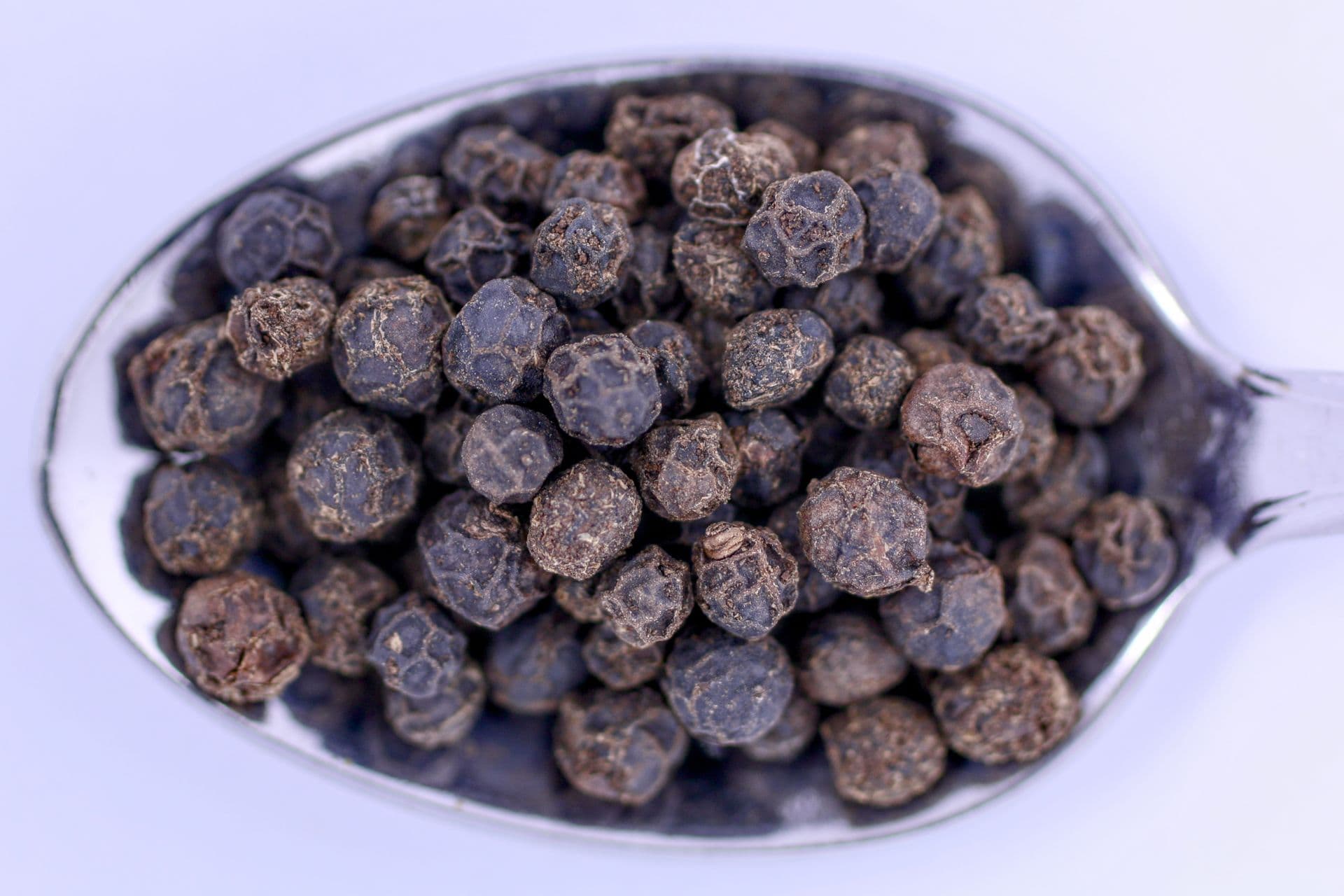
- Density. Tare the jug, pour peppercorns in from a steady height until they overflow, level with a ruler without pressing, and weigh. Do it three times and average. Pouring style shifts the result by a few grams, so compare samples with the same jug and the same hand.
- Admixture. Spread 100 g on the tray and pick out stems, stones, dust and anything that is not a peppercorn. Weigh what you picked: 1 g is 1%.
- Pinheads and broken berries. From the same 100 g, sort out the tiny undeveloped berries and the broken ones, and weigh them.
- Light berries, as a rough check. Drop 50 g into a bowl of water and skim what floats. ISO 959-1 uses an alcohol and water solution, which floats fewer berries than plain water. Your figure will come out higher than a lab result, so use it only to compare offers.
- Smell. Crush a few berries. Fresh pepper smells sharp and resinous. A musty note points to mould or old stock.
Illustration
Moisture, volatile oil and piperine need a lab. To compare grades side by side, request a sample of up to three grades, or ask for a quote on the grade and standard you need. All grades are on the black pepper page.
Frequently asked questions
What does 500 g/l mean for black pepper?
It is the bulk density: one litre of the whole peppercorns weighs at least 500 grams. Higher density means fewer light berries and pinheads. Our G500 also carries limits of 13.5% moisture, 1% admixture and 5% light berries.
Is higher density always better pepper?
Higher density means better-filled berries and usually a cleaner lot, but not necessarily more flavour. ISO 959-1 notes that smaller berries can be more aromatic. Ask for volatile oil and piperine figures if flavour matters for your product.
What is the difference between FAQ and ASTA black pepper?
FAQ means fair average quality, pepper sold as it comes from the crop after drying and sieving. ASTA pepper has been machine-cleaned to meet the cleanliness specifications of the American Spice Trade Association. The g/l figure can be the same for both.
What moisture should black pepper have for Europe?
The European Spice Association sets a maximum of 12% for black pepper, and some buyers ask for 7% to 11%. ISO 959-1 and TCVN 7036:2008 allow up to 13% for non-processed pepper, so write the lower European figure into the contract.
Sources
- ISO 959-1:1998, Pepper (Piper nigrum L.), whole or ground, Specification, Part 1: Black pepper, definitions, physical and chemical requirements, note on berry appearance and flavour (preview)
- TCVN 7036:2008, Hạt tiêu đen (Piper nigrum L.), Quy định kỹ thuật, classes by bulk density, light berries, foreign matter, moisture, volatile oil, piperine
- American Spice Trade Association, Clean, Safe Spices, 2017 update, Table 1, ASTA Cleanliness Specifications
- US Food and Drug Administration, Food Defect Levels Handbook, pepper, whole
- CBI (Netherlands Ministry of Foreign Affairs), Entering the European market for black pepper, updated 11 May 2026, ESA minimum quality, bulk density, sterilisation after import
- Tridge, What are the different grades of black peppercorn?, Vietnamese FAQ and ASTA grades with moisture limits
- FAO, Standard grading of grain quality, fair average quality contracts