Shipping charcoal safely: IMDG class 4.2 and UN1361
For years, a shisha importer in Rotterdam booked his coconut cubes the same way. The forwarder entered "coconut shell charcoal briquettes" as general cargo, the factory sent a lab report saying the charcoal had passed the self-heating test, and the container sailed. In 2026 he sends the same booking with the same lab report. The line sends it back: charcoal has to be declared as dangerous goods, and the report no longer changes that.
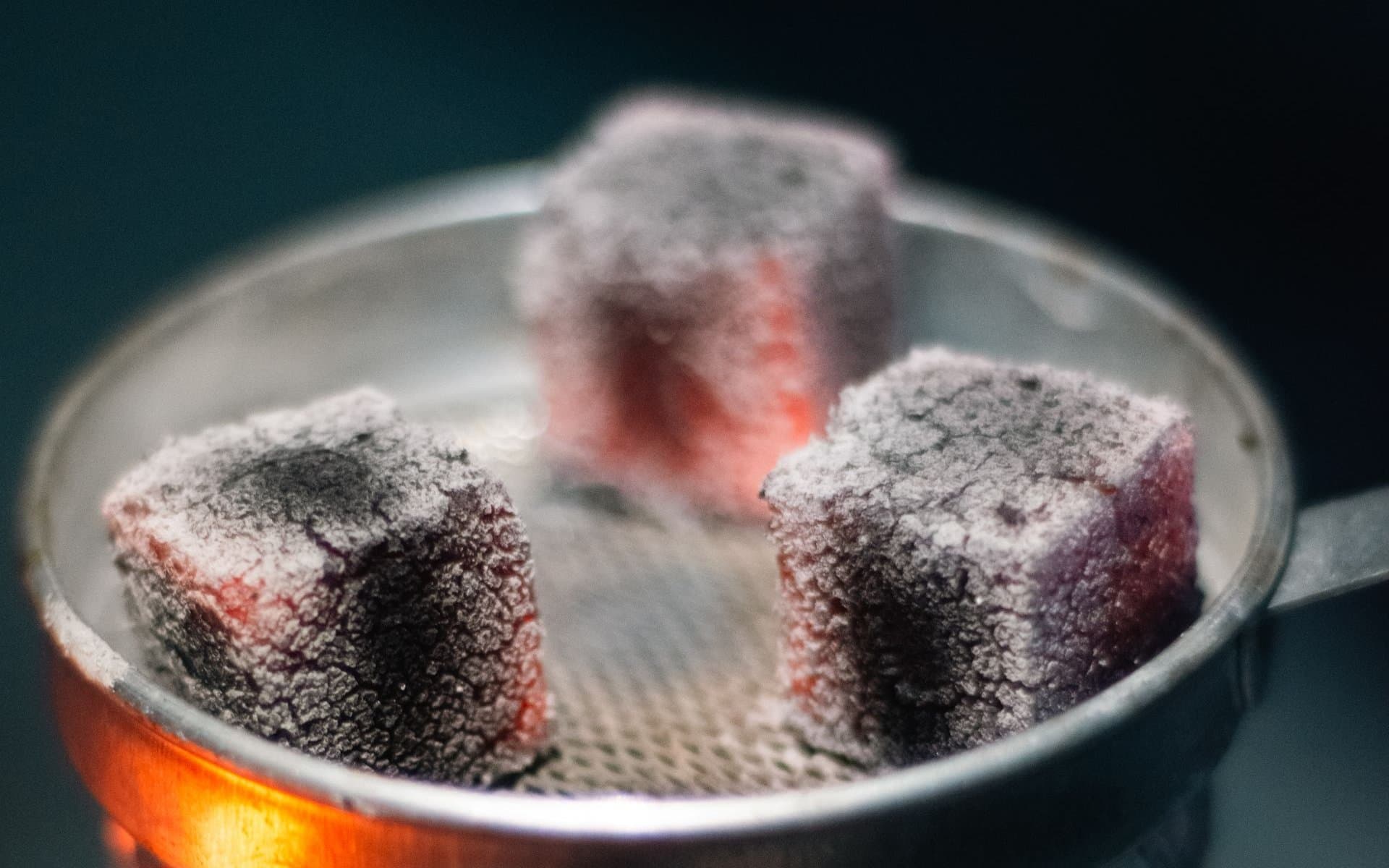
Charcoal made from coconut shell, wood or bamboo is UN1361, "CARBON, animal or vegetable origin", in IMDG class 4.2 (substances liable to spontaneous combustion). Since 1 January 2026, under Amendment 42-24 of the IMDG Code, it must always travel as dangerous goods. It has to be weathered or cooled before packing, packed at 40°C or less, stowed with air space in the container, and declared with the dates and temperature of packing. The shapes and specifications are covered in our guide to coconut shell charcoal: shisha cubes, pieces and briquettes.
Why charcoal heats itself
Charcoal is porous carbon with an enormous surface. In contact with air it oxidises slowly, and that reaction gives off heat. In a small bag the heat escapes. In the middle of 26 tonnes of cartons packed into a steel box, it can build up until the cargo reaches its ignition temperature without any spark.
Three things make this worse, according to guidance from the Cargo Incident Notification System (CINS), the safety group of the container lines:
- Water: wetting charcoal is itself a reaction that releases heat, so damp cargo or rain on the cartons speeds up self-heating.
- Incomplete carbonisation: shell that was not fully converted in the kiln still holds organic matter that keeps reacting.
- Additives: accelerants in quick-lighting charcoal, and some shisha tablets, lower the ignition temperature.
CINS records show nearly 70 fires on container ships linked to charcoal between January 2015 and December 2022. Most of those consignments had been misdeclared, so the crew did not know what was burning or where it was stowed, and that record led the IMO to change the rules.
What changed on 1 January 2026
Under the IMDG Code up to Amendment 41-22, charcoal could leave the Code altogether. Special provision 925 exempted carbon that passed the self-heating test in the UN Manual of Tests and Criteria (test N.4), and special provision 223 exempted any substance that, when tested, did not meet the criteria of its class. A shipper with a passing certificate booked the goods as general cargo.
The IMO adopted Amendment 42-24 in May 2024 by resolution MSC.556(108). It could be applied voluntarily from 1 January 2025 and became mandatory on 1 January 2026. Some lines enforced it earlier: MSC from 1 November 2025, and a Maersk advisory for bookings from 1 October 2025.
| Point | Up to Amendment 41-22 | Amendment 42-24, mandatory from 1 January 2026 |
|---|---|---|
| Status of charcoal that passes test N.4 | exempt from the Code (SP 925, SP 223) | still dangerous goods, test cannot exempt it (SP 978) |
| Treatment before packing | not set in the Code | 14 days of weathering, or steam, cooling and inert gas |
| Temperature when packed | not set in the Code | 40°C maximum on the day of packing |
| Space in the container | not set in the Code | 30 cm headspace, stack height or block limits |
| Declaration | general cargo was possible | dangerous goods declaration with production date, packing date and temperature |
Special provision 978 in plain words
SP 978 sets six conditions for UN1361:
- It defines the cargo: carbon made by pyrolysis of organic material "such as bone, bamboo, coconut shell, jute or wood". Coconut shell charcoal is named outright, and so are briquettes made from it.
- The UN N.4 self-heating test "shall not be used to exempt" this carbon from the Code.
- Charcoal that has not been tested is assigned to packing group III at least. A test can still place it in packing group II or III, but never outside the Code.
- Unless the competent authority approves otherwise, the material is either weathered, meaning stored unpacked, under cover but in the open air, for at least 14 days before packing, or treated with steam and cooling after pyrolysis, packed under an inert gas such as nitrogen and then left under loose cover or in the open air for at least 24 hours before transport.
- It goes into its packaging only when its temperature does not exceed 40°C on the day of packing.
- In the container, at least 30 cm of headspace stays free, and either the stack is no higher than 1.5 m or the packages form blocks of at most 16 m³ with at least 15 cm between blocks.
The exemption test, and what it still tells you
Test N.4 places the sample in a wire-mesh cube inside an oven, normally at 140°C, and watches it for 24 hours. A sample that ignites or climbs 60°C above the oven temperature is self-heating. The 100 mm cube shows whether the material self-heats at all. A positive result in the smaller 25 mm cube marks the more dangerous material, packing group II, while charcoal that self-heats only in the 100 mm cube falls in packing group III.
A lot that passes comfortably is well carbonised and stable. A lot that self-heats in the 25 mm cube needs packing group II packaging and points to a problem in the kiln. If your customer or your insurer wants a recent N.4 report, put it in your quote request and we will confirm what can be arranged for your lot.
Illustration
Cooling before packing: weathering and the 40°C rule
Weathering lets the fresh charcoal finish its first, fastest oxidation in the open, where the heat escapes, instead of in a sealed carton. Fourteen days is the minimum in SP 978. The material stays under a roof so rain cannot reach it, because wet charcoal heats again.
On packing day the charcoal must be at 40°C or below. Carriers add their own check at stuffing: CINS guidance and Maersk's 2025 advisory both ask that the cargo be no more than 5°C above the ambient temperature when it goes into the container, recorded with photos of both readings. On a 34°C afternoon that leaves little margin.
Our catalog sets moisture at 5% maximum for the Cube 25 mm shisha cube and up to 20% for coconut shell charcoal in pieces, C60 and C75. Dry charcoal lights well, and keeping it dry from the kiln to the container keeps the heat of wetting out of the cargo.
Packing, marks and the container
UN1361 is packed under IMDG packing instruction P002, in packaging certified to the UN standard for its packing group. Amendment 42-24 removed the special packing provision that allowed certain bags for charcoal, and MSC lists woven plastic, textile and paper bags (5H1, 5L1, 5M1) as no longer allowed. Each package carries the UN number, the proper shipping name and the class 4.2 label. Where retail boxes travel inside a certified outer box, the marks go on the outer box.
Our catalog lists the packs on each grade page. For a dangerous goods shipment the outer packaging has to be UN-certified and marked, so tell us how you sell, for example 1 kg shisha boxes in a master carton, and we will confirm the certified outer pack for your lot.
The container carries the class 4.2 placard on all four sides and must be dry, clean and sound, since rain through a damaged roof is the last thing this cargo needs. The headspace and stack limits of SP 978 leave less room than an old general cargo load, so the tonnage per container can be lower than you are used to. Ask for the loading plan and the net weight per container in your quote request.
Documents a buyer should see
| Document | Who issues it | What to check |
|---|---|---|
| Dangerous goods declaration | shipper | UN1361, CARBON, animal or vegetable origin, class 4.2, packing group, date of production, date of packing, temperature on the day of packing |
| Container packing certificate | whoever packed the container | that the container was packed and placarded under the IMDG Code |
| Weathering certificate | the producer | production date, start and end of weathering, packing dates, temperature at packing, photos |
| Safety data sheet | the producer | the product and its use, consistent with the booking |
| Vanning survey report | surveyor, where the carrier asks for one | cargo and ambient temperature, photos of stuffing and the closed, sealed doors |
Commercial documents such as the invoice, packing list and bill of lading come on top. Our guide to export documents from Vietnam covers those.
Who does what on an FOB order
On our coconut shell charcoal orders the factory is the seller named on the contract and the invoice, and the buyer pays the factory directly. Luason is the factory's authorised sales agent.
Under FOB the factory produces, weathers, packs and stuffs the container, and delivers it on board at Ho Chi Minh City (Cat Lai). You contract the ocean freight, so it falls to you or your forwarder to book with a line that accepts UN1361 on your route, as dangerous goods, from the start.
Carriers add rules of their own, and these differ by line and by trade. Maersk's 2025 advisories, for example, accepted charcoal only from pre-audited shippers, with a weathering certificate, a vanning certificate from a nominated surveyor and a vacuum-sealed thermal liner in each container, and some of its local offices refused charcoal for shisha from certain origins. Before you agree a shipment date, have your forwarder confirm in writing that the line will take the cargo, which documents it wants and what dangerous goods surcharge applies. The differences between FOB, CFR and CIF decide who carries this work. If you prefer us to quote CFR or CIF, say so in your request and we will come back with freight once a line has accepted the booking.
A checklist before booking and on arrival
Before the contract:
- Write into it that the goods ship as UN1361, class 4.2, under the IMDG Code in force, with weathering or cooling under SP 978.
- Ask for the weathering record and the planned packing date, and agree that the dangerous goods declaration shows production date, packing date and temperature.
- Agree the outer packaging and the net weight per container.
- Confirm that the product is natural charcoal without ignition agents.
On arrival:
- Before opening the doors, put a hand or an infrared thermometer on the container walls. A wall clearly warmer than the boxes around it is a warning sign. Call the terminal rather than open it.
- Open the doors carefully and let the container air out. Smouldering charcoal releases carbon monoxide, which has no smell.
- Check the first cartons for heat, smoke smell, dark scorch patches or wet spots.
- Store the cartons dry and off the floor, away from heat, and do not stack them against warm walls.
To check the charcoal itself before a full order, request a sample. Prices change weekly and are on the price board.
Frequently asked questions
Is coconut shell charcoal dangerous goods for sea freight?
Yes. It is UN1361, CARBON, animal or vegetable origin, class 4.2, and since 1 January 2026 it must be declared as dangerous goods. Special provision 978 names coconut shell.
Can a passed self-heating test still exempt charcoal from the IMDG Code?
No. Special provisions 925 and 223 no longer apply to UN1361, and SP 978 says the UN N.4 test shall not be used to exempt it. The test can still decide between packing group II and III.
How long must charcoal be weathered before packing?
At least 14 days unpacked, under cover but in the open air, unless it is steamed, cooled and packed under inert gas. Either way it must be at 40°C or less on the day of packing.
Do shisha briquettes follow the same rules as lump charcoal?
Yes. Pressed cubes and hexagonal briquettes made from coconut shell charcoal are covered by the same UN1361 entry. Some carriers apply extra conditions to charcoal sold for shisha, so check with the line before booking.
Who books the dangerous goods freight on an FOB order?
The buyer, through a forwarder or directly with the line. The factory prepares the cargo, packing and documents. We quote CFR or CIF on request once freight is confirmed.
Sources
- IMO, IMDG Code 2024 Edition (Amendment 42-24): voluntary from 1 January 2025, in force 1 January 2026
- Hong Kong Marine Department, Information Note No. 68/2024, adoption of resolution MSC.556(108) on 23 May 2024
- West of England P&I, "SOLAS Amendments to the IMDG Code (Amendment 42-24)", September 2024, withdrawal of SP 925 and SP 223 for charcoal, new SP 978 and SP 979
- Maersk, customer advisory on charcoal, November 2025, full text of SP 978, weathering certificate, vanning certificate, packaging not allowed, cargo no more than 5°C above ambient
- MSC, "IMDG 42-24: Regulatory changes to the transportation of charcoal (carbon)", customer advisory, October 2025, with its presentation "Transportation of charcoal (carbon), new regulation as of 1 January 2026": packing groups II and III, P002, removal of PP12, placards, information on the declaration
- IIMS, "Safe carriage of charcoal in containers", 13 August 2025, causes of self-heating and SP 978 summary from the CINS guidelines
- Container News, "Fire incidents lead to more stringent rules for shipping charcoal in containers", 4 October 2024, nearly 70 fires from January 2015 to December 2022
- CINS and International Group of P&I Clubs, Guidelines for the Carriage of Charcoal and Carbon in Containers, October 2017 edition, why charcoal self-heats, test cubes, 60°C rise within 24 hours, cargo temperature at stuffing
- Hazardous Products Regulations (Canada), SOR/2015-17, self-heating categories by test N.4 with 25 mm and 100 mm sample cubes at 140°C