Coconut shell charcoal: shisha cubes, pieces and briquettes
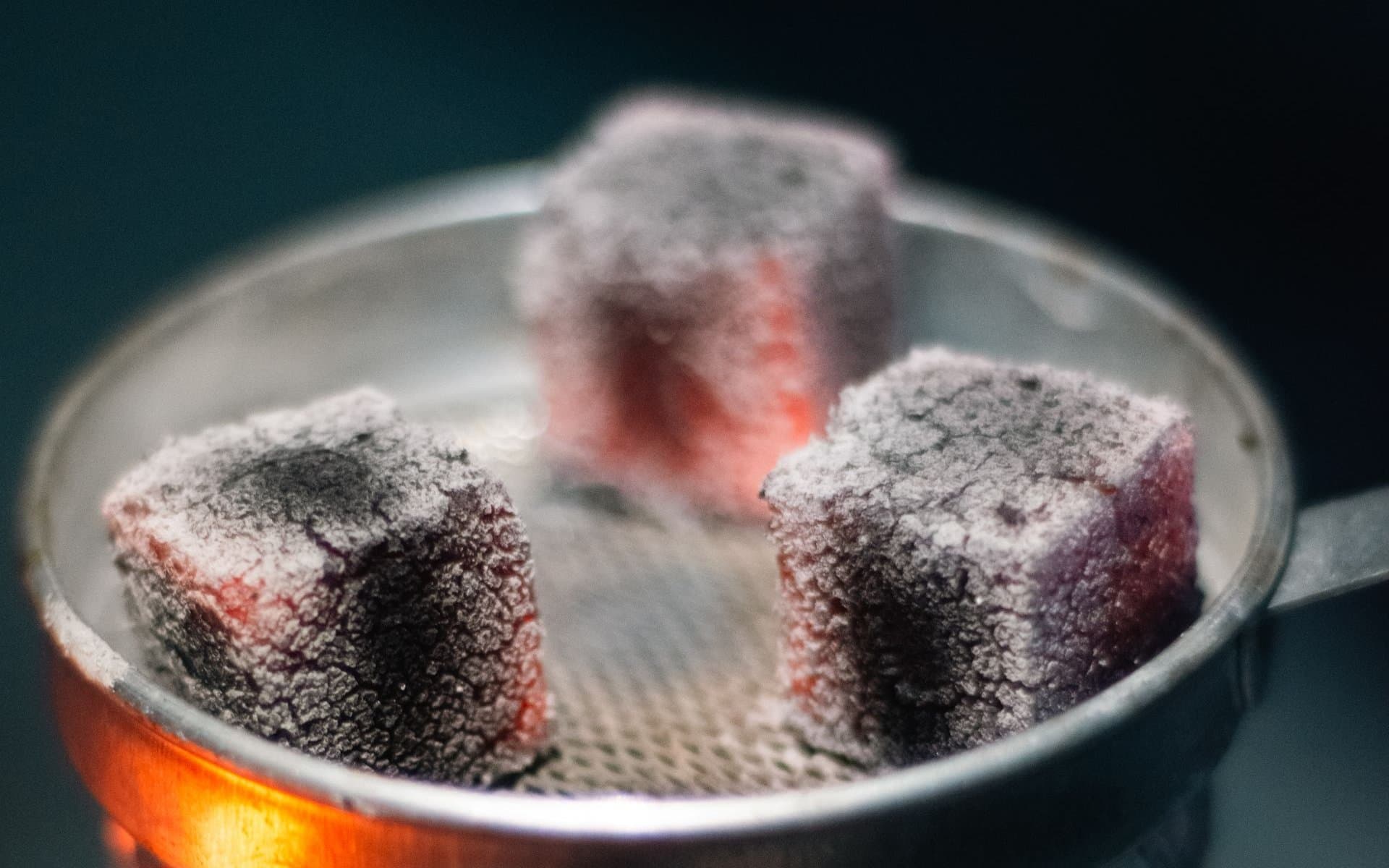
A shisha wholesaler lights two sample boxes side by side. Both spec sheets say "coconut charcoal, 25 mm cube, ash 2%". After forty minutes one set of cubes wears a thin, pale skin of ash that falls away when tapped. The other has built a thick grey crust that chokes the heat, and the lounge staff would have to knock it off every twenty minutes. On paper the two ash figures were identical, but nobody had written down how either was measured.
Coconut shell charcoal is sold in three main forms. The 25 mm cube is a pressed briquette made for hookah bowls. The hexagonal briquette is extruded through a six-sided die, usually with a hole down the middle, and goes mostly to grills and restaurant barbecue. Shell charcoal in pieces, often called lump, is the carbonised shell itself, broken and screened but not pressed, with no binder. The three differ in how they are made, in what they leave behind as ash and in how evenly they burn. This guide compares them, sets them against what our catalog lists, and shows the checks that tell a good lot from a doubtful one.
Three forms, one raw material
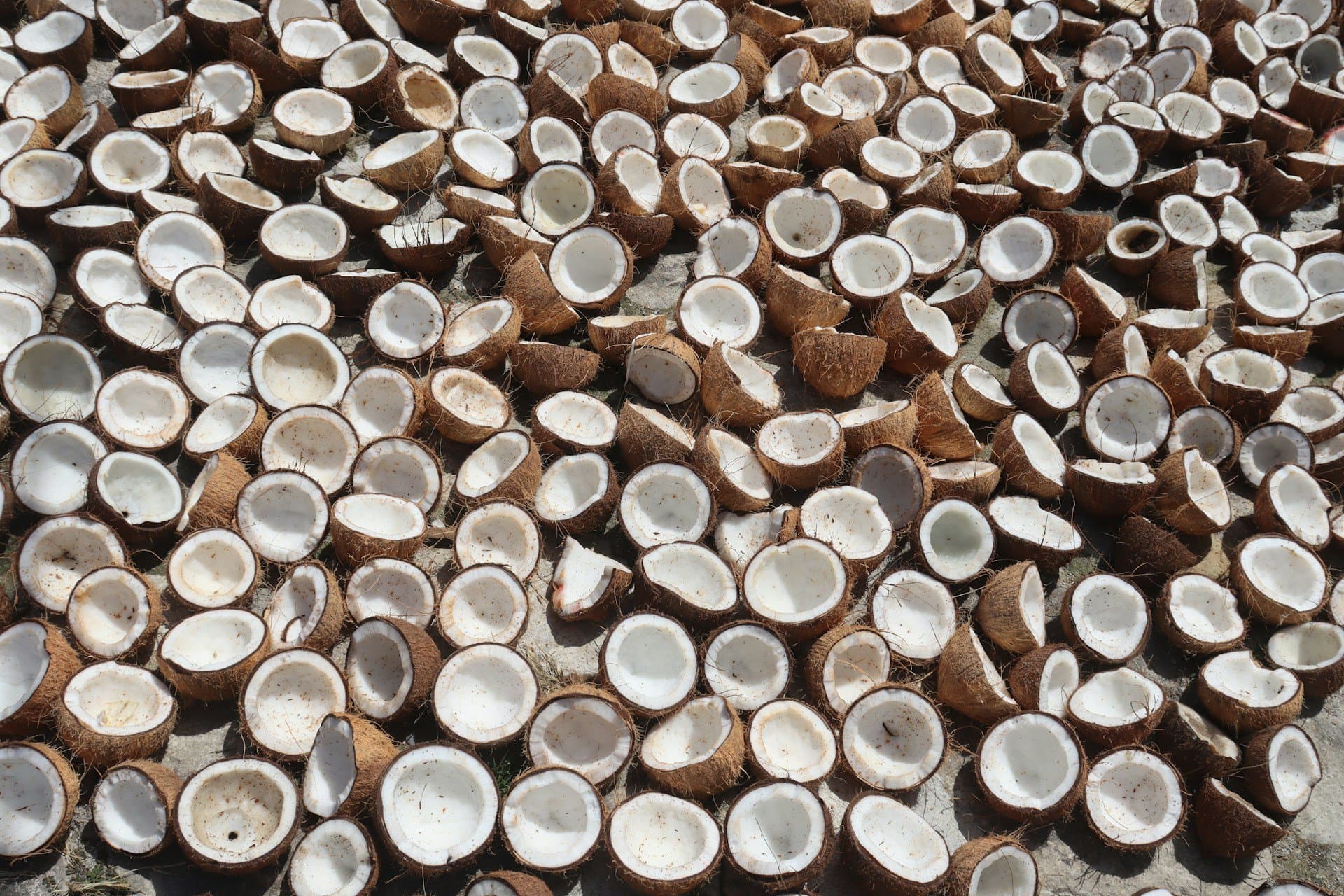
All three start the same way. Coconut shells, the hard layer left after the meat has been taken out for copra, desiccated coconut or coconut milk, are carbonised in a kiln with little air. The shell is dense and low in minerals, which is why coconut charcoal can reach ash levels that wood charcoal rarely does. Vietnam has plenty of it: Ben Tre province in the Mekong Delta alone was expected to reach about 80,000 hectares of coconut by the end of 2024.
Illustration
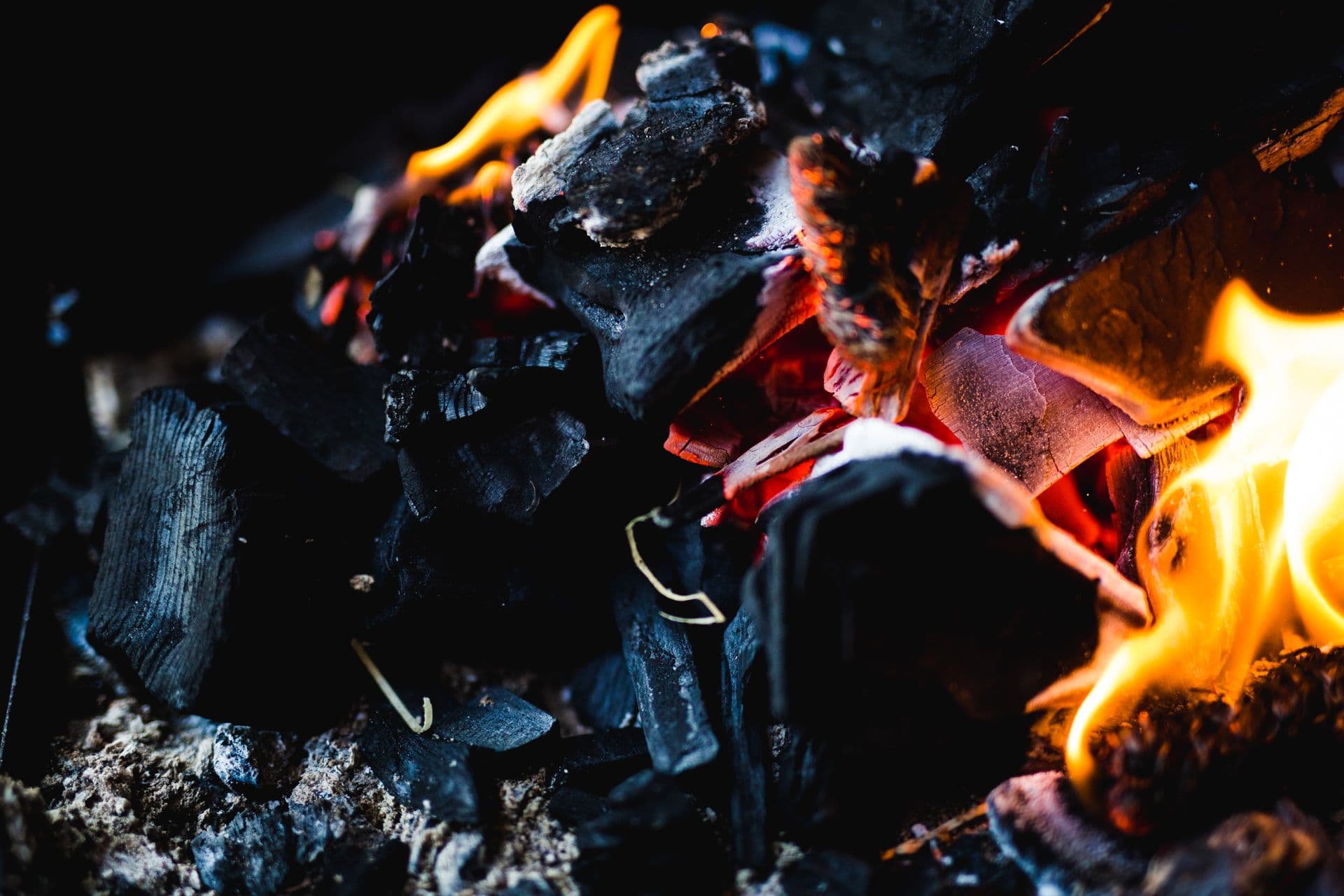
- Shell charcoal in pieces is the carbonised shell, sorted and screened to size. Nothing is added. You get curved, irregular pieces.
- Cube 25 mm is made from the same charcoal ground to powder, mixed with a binder and water, pressed into 25 mm cubes and dried.
- Hexagonal uses the same powder and binder, pushed through a screw extruder. The hole in the centre lets air through the briquette so it burns more evenly.
Pressing adds cost, and in return every cube has the same size and weight, so a hookah bowl heats the same way every time. A bag of shell pieces holds big and small pieces together, which is fine in a furnace and awkward on a shisha head.
The catalog specification side by side
Our charcoal range has three coconut shell grades: the shisha cube and two grades of shell charcoal in pieces, sorted by fixed carbon. The figures below are the general limits in our catalog.
| Cube 25 mm (CUBE_25) | Shell charcoal C60 (COCONUT_C60) | Shell charcoal C75 (COCONUT_C75) | |
|---|---|---|---|
| Form | pressed cube, 25 mm | pieces, medium size | pieces, medium size |
| Binder | yes | none | none |
| Fixed carbon | above 70% | 60 to 65% | above 75% |
| Ash, max | 3% | 3% | 3% |
| Volatile matter | below 20% | 10 to 30% | 10 to 20% |
| Moisture, max | 5% | 20% | 20% |
| Calorific value | above 7,000 kcal/kg | above 7,000 kcal/kg | above 7,000 kcal/kg |
| Main use | shisha | raw material, industrial fuel | raw material, industrial fuel |
The range also has macadamia nutshell charcoal in pieces, with fixed carbon of 85 to 95%, and three wood charcoals: a sawdust briquette and hardwood charcoal from mangrove and khaya. Their full specifications are on each grade page.
Coconut and macadamia shell charcoal ship under HS 4402.20, the subheading for charcoal of shell or nut. The sawdust briquette and the hardwood grades are wood charcoal under 4402.90. The packs are listed on each grade page. Prices change weekly and sit on the price board, not in this guide.
Each limit can be agreed per order. A lounge chain that wants ash at 2% or a smaller cube can ask for it, and the agreed figure goes into the contract. On our orders the factory is the seller named on the contract and the invoice, and the buyer pays the factory directly. Luason is the factory's authorised sales agent.
Reading the four numbers
Fixed carbon, volatile matter and ash are one sum
On a dry sample, fixed carbon is what remains after volatile matter and ash are taken away. The European barbecue charcoal standard, EN 1860-2, calculates it that way. So the three numbers are linked: a sample with 3% ash and 15% volatile matter holds 82% fixed carbon. When a spec sheet shows fixed carbon, ash and volatile matter that add up to well over 100%, at least one of them was measured on another basis or not measured at all.
Fixed carbon is the part that glows. More of it means a longer, hotter, cleaner burn. Volatile matter is what comes off as gas and smoke while the charcoal heats up. On a hookah bowl, smokers can taste it, so for cubes a low volatile figure matters more than on a grill.
Ash: percentage and behaviour
Ash is the mineral part that does not burn. A high ash percentage means less fuel per cube, and on a shisha bowl the way the ash behaves also decides how often someone has to tend the coals. Good coconut cubes form a light ash skin that drops off on its own or with a tap. Poor cubes form a crust that insulates the coal and cools the bowl.
Sellers often quote ash colour too, with white or light grey preferred. Colour is a fair first impression. The contract still needs the percentage.
Moisture
Moisture is measured as the water driven off at 105°C. Wet charcoal is hard to light, spits and sparks, and you pay freight for water. EN 1860-2 caps moisture at 8% for barbecue charcoal. Our catalog sets 5% for the shisha cube and up to 20% for shell charcoal in pieces, which is mostly sold as raw material. If you need drier pieces, put the figure in your quote request.
Dry charcoal still needs care before it is packed. Freshly made charcoal can heat up again by itself in a closed container, so it has to cool and rest first. The rules for that, class 4.2 and safe packing, are in our guide to shipping charcoal safely.
What the EU standard says, and what it does not
EN 1860-2:2023 covers barbecue charcoal and barbecue charcoal briquettes. For lump barbecue charcoal it requires fixed carbon of at least 75% on a dry basis, ash of at most 8% on a dry basis and total moisture of at most 8%. It also sets a size distribution: no piece over 150 mm, at least 80% by mass larger than 20 mm, and no more than 7% smaller than 10 mm.
Pressed briquettes are expected to score lower. The European Commission put it this way in December 2025: lumps are expected to have about 75% fixed carbon against 60% for briquettes, and ash of 8% against 18%. The same Commission note reported on 23 products bought in Italy, where more than half fell short on fixed carbon and seven exceeded the ash limit.
Read our catalog against these figures with care. EN 1860-2 was written for barbecue products, and our Cube 25 is a shisha cube, so a contract for hookah cubes has to carry its own figures. Our shell charcoal in pieces is listed with up to 20% moisture, well above the 8% in the standard, and C60 also sits below its 75% fixed carbon. If your market or your customer requires a test report against EN 1860-2 for barbecue products, say so in your quote request and we will confirm what can be provided for your lot.
The binder question
EN 1860-2 defines a briquette as compressed charcoal particles "with a food-compatible binder or without a binder". In coconut briquettes the binder is usually a starch, most often tapioca (cassava). A 2024 study of palm shell charcoal briquettes found tapioca starch among the binders that keep ash low and fixed carbon high. Too much binder dilutes the carbon. Too little gives a cube that crumbles in the carton.
Three things to agree in writing:
- the binder type, for example tapioca starch, and that no other additive is used
- that the product is natural charcoal, not quick-lighting charcoal with an ignition agent
- that the charcoal is 100% coconut shell, unless you agree a blend
If you need the binder share stated for your lot, ask in your quote request and we will confirm it before the contract.
Illustration
Which form for which buyer
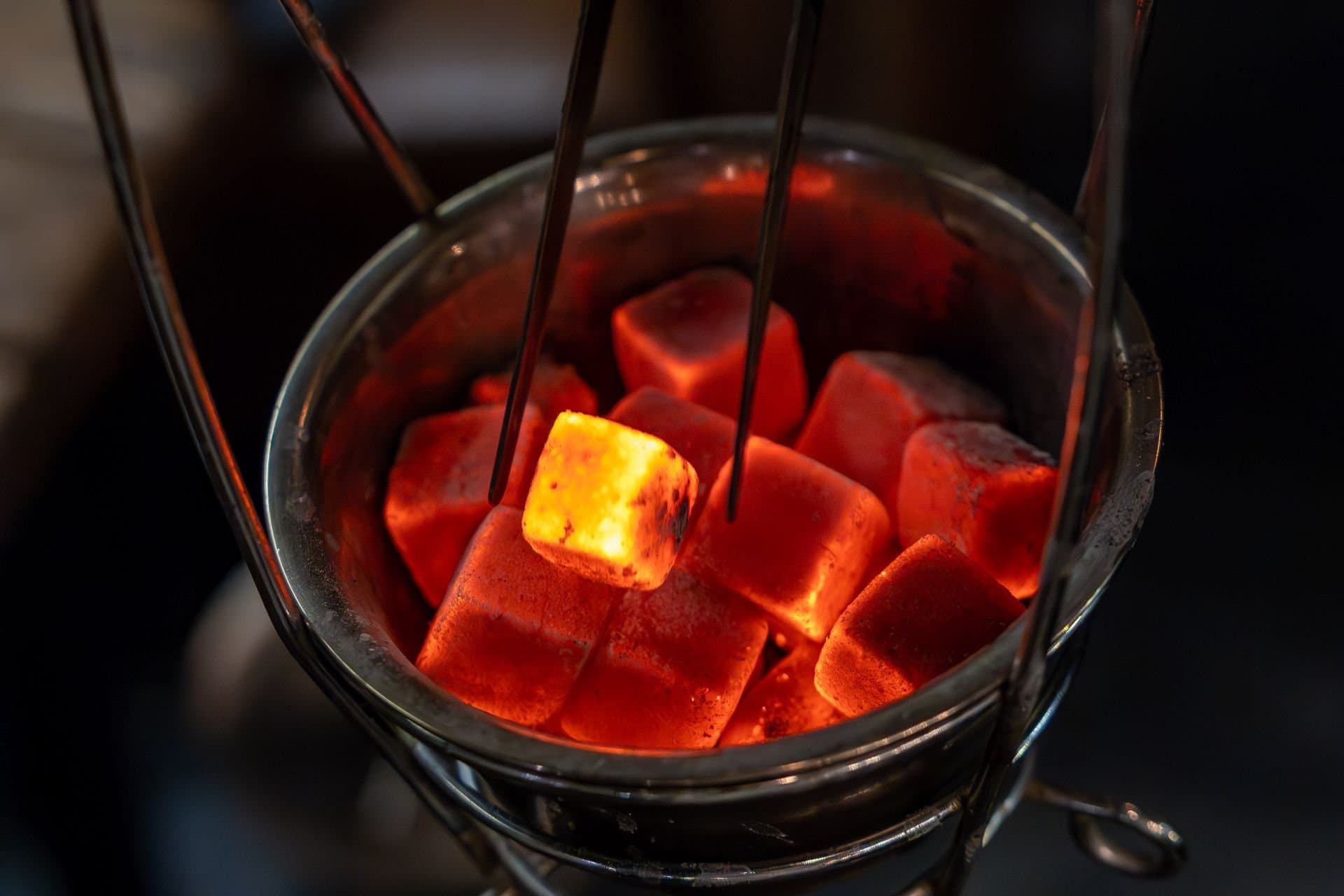
Shisha distributors and lounges buy the 25 mm cube. It is the size most hookah bowls are set up for, and every cube heats the same way. If your customers use smaller bowls, a different cube size is a separate product. State the size you need.
Barbecue brands and restaurant suppliers mostly buy hexagonal briquettes. They light slower than lump but burn longer and steadier, and the uniform shape stacks well in a grill. Our catalog does not list coconut hexagonal briquettes at the moment. For the grill it has a sawdust briquette and hardwood lump charcoal from mangrove and khaya.
Industrial buyers, and makers of activated carbon or briquettes, buy shell charcoal in pieces. C75 has the higher fixed carbon of our two coconut grades, and macadamia nutshell charcoal the highest in the range. Pieces are the least uniform form, so the size distribution belongs in the contract. EN 1860-2's sizing for barbecue charcoal is a fair reference.
Test a sample at your desk
A lab report describes the sample that went to the lab. The checks below work on any carton you open, with a scale that reads to 0.01 g, an electric coal heater and a ruler.
- Measure ten cubes with a ruler and weigh them one by one. In a good lot they are close to one another in size and weight. Big spread in weight suggests uneven pressing.
- Drop five cubes from about one metre onto concrete. A few chips are normal. Cubes that shatter will also break in transit, and you will find dust at the bottom of the carton.
- Light one cube on the heater and smell it once the flame is gone. Natural coconut charcoal smells of little. A chemical or sharp smell points to an additive.
- Weigh one cube, burn it completely on the heater, let it cool and weigh the ash. A 15 g cube with 3% ash leaves about 0.45 g. If yours leaves 0.8 g, the ash is above 5%.
- Put three cubes on a bowl and time them. Note how long until they glow all over, whether they spark or crack, how the ash forms and whether it falls away, and how long the heat lasts. Run the same test on the next lot and compare.
Keep part of the approved sample sealed. When the container arrives, run the same checks on cartons from several pallets and compare them with that sample. To see the charcoal before you commit, contact us or ask through the quote form. Couriers treat charcoal as dangerous goods, so we arrange samples case by case.
Frequently asked questions
What is the best coconut charcoal shape for shisha?
The 25 mm cube is the standard for hookah bowls. It is pressed to a fixed size and weight, so it heats the same way every time. Our Cube 25 mm grade sets ash at 3% maximum and fixed carbon above 70%.
Why does coconut shell charcoal have less ash than wood charcoal?
Coconut shell is dense and low in minerals, and minerals are what stay behind as ash. EN 1860-2 allows up to 8% ash for barbecue charcoal, while our coconut grades are set at 3%.
Does coconut charcoal contain a binder?
Cubes and hexagonal briquettes are pressed from charcoal powder with a binder, usually tapioca starch. Shell charcoal in pieces has no binder. Agree the binder type in the contract.
Does EN 1860-2 apply to shisha charcoal?
EN 1860-2 is written for barbecue charcoal and barbecue charcoal briquettes. It is still a useful reference, but for hookah cubes the ash, moisture and fixed carbon limits should be written into the contract.
How is coconut charcoal shipped safely?
Charcoal always ships as IMDG class 4.2 dangerous goods (UN1361). Since 1 January 2026, under Amendment 42-24 (special provision 978), even charcoal that passes the self-heating test cannot travel as non-dangerous goods, and it must still be cooled before packing. Our guide to shipping charcoal explains the rules.
Sources
- CEN, EN 1860-2:2023, Appliances, solid fuels and firelighters for barbecuing, Part 2: Barbecue charcoal and barbecue charcoal briquettes, requirements and test methods. Definitions, fixed carbon, ash, moisture and granulation for barbecue charcoal (preview of SIST EN 1860-2:2023)
- European Commission, DG Environment, "Many charcoal barbecue products fall short of EU standards on composition and pollutant emissions", 18 December 2025, fixed carbon and ash expected for lumps and briquettes, results of 23 products
- Seetapong et al., exploring binders for the fabrication of briquettes from palm shells, BioResources 19(3), 5047-5057, June 2024, tapioca starch with the lowest ash and highest fixed carbon
- HM Revenue and Customs, UK Trade Info, commodity code 4402, wood charcoal including shell or nut charcoal
- Vietnam Agriculture, "2024: The year of Ben Tre coconut", 27 August 2024, coconut area in Ben Tre