Robusta screen sizes S18, S16 and S13 explained
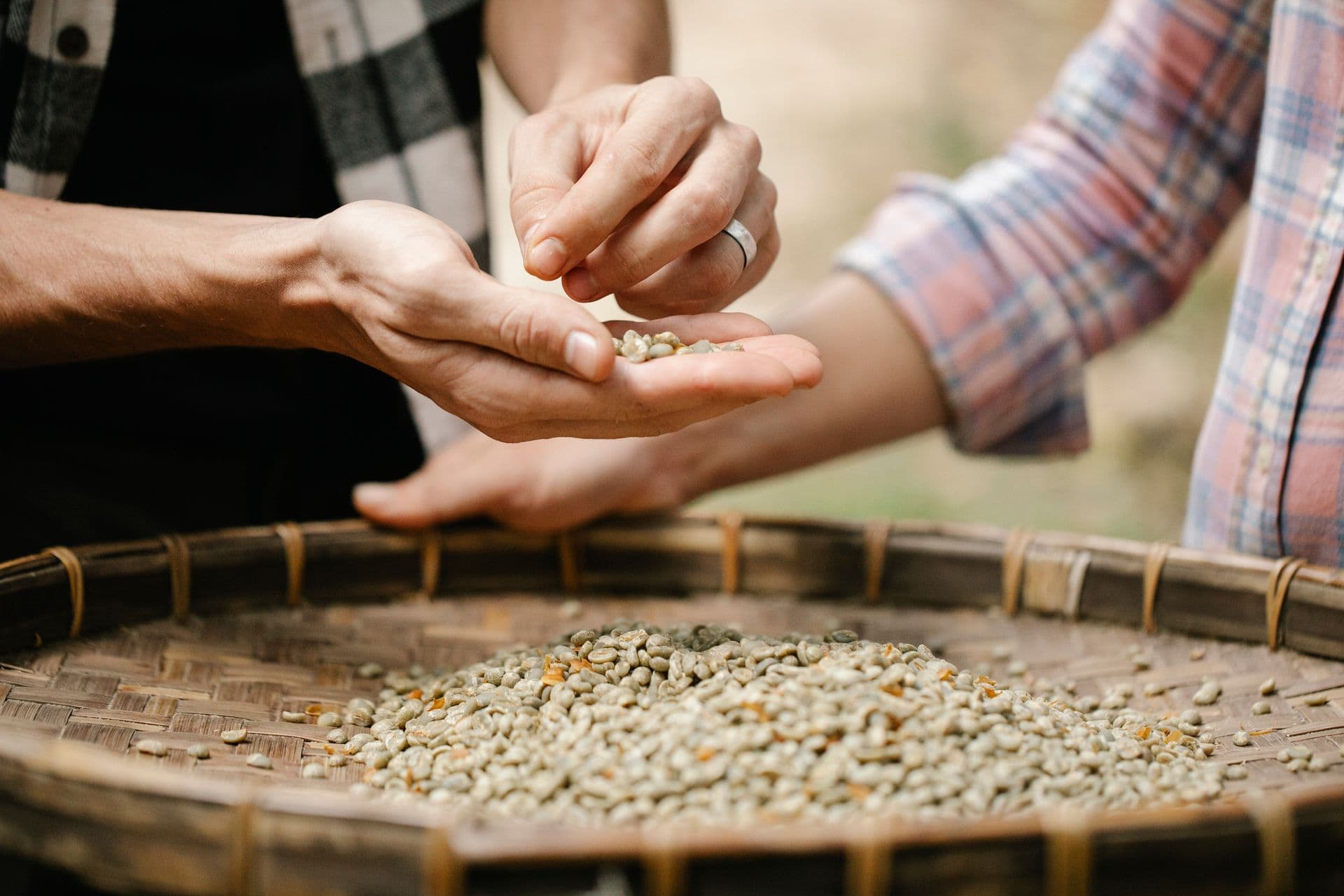
A roaster in Busan borrows a set of laboratory sieves and pours 300 g of an S18 sample through the 7.1 mm screen. When she weighs what stayed on top, it comes to 264 g. Twelve percent of the "screen 18" coffee has fallen through. Is the lot short of grade?
Not necessarily. A screen size in robusta sets a minimum share by weight. "S18" means that, by trade custom, at least 90% of the coffee will not pass a round hole of about 7.1 mm, and the rest can be smaller. Her 264 g is 88%, two points short, and whether that matters depends on the contract. Below are the three screen grades on our board, what each one measures and leaves out, and the lines a buyer should write down.
The number is a hole
Green coffee is graded on round-hole sieves. The trade numbers them in 64ths of an inch, so screen 18 is 18/64 inch. Vietnam's standard for green coffee, TCVN 4193, takes its sieve sizes from the ISO method for size analysis (ISO 4150, in Vietnam TCVN 4807) and gives them in millimetres:
| Screen | Round hole (ISO sieve in TCVN 4193) | 64ths of an inch |
|---|---|---|
| 18 | 7.10 mm | 7.14 mm |
| 16 | 6.30 mm | 6.35 mm |
| 13 | 5.00 mm (listed as No 12½, the former ISO No 13) | 5.16 mm |
The gap between the two columns is small, but at screen 13 it is about 0.16 mm, enough to shift a borderline lot by a point or two. A buyer who checks the grade on arrival should use the same sieve the seller used, or name it in the contract.
Size matters for two reasons. Even beans roast evenly, because small beans in a large-bean batch char before the large ones are done. And price follows size: bigger screens trade at a premium on the physical market, while ICE Robusta futures grade on screen limits from 15 down to 12.
S18, S16 and S13 on our board
Our robusta coffee comes from the Central Highlands and is quoted FOB Ho Chi Minh City (Cat Lai) in 60 kg jute bags. The catalog gives each grade these limits:
| Grade | Standards offered | Black and broken, max | Moisture, max | Foreign matter, max |
|---|---|---|---|---|
| S18 | Wet polished | 2% | 12.5% | 0.1% |
| S16 | Wet polished, Standard | 2% | 12.5% | 0.1% |
| S13 | Standard | 5% | 13% | 0.5% |
In Vietnamese export offers S18 and S16 at these limits are usually called grade 1 (R1), and S13 at 5% black and broken is grade 2 (R2). The share that must stay on the screen follows the 90% custom. If your mill or roaster needs a different figure, for example 95% on screen 16, send a quote request and we will confirm the figure for your lot. Specifications can be agreed per order.
Prices for each grade and standard sit on the price board and change weekly, so this guide quotes none.
Black and broken: the two defects that cost you in the cup
Vietnamese contracts cap defects with one combined figure, black and broken (often written B&B), as a percentage by weight. ICE gives the definitions most buyers use:
- a black bean is one where more than half of the outer surface and interior is black
- a bean fragment is a piece smaller than half a bean
Black beans come from overripe, diseased or badly dried cherries and give a flat, harsh, sometimes fermented taste. Broken beans burn in the roaster before the whole beans are done and darken the batch. A 2% limit in S18 and S16 means at most 6 g of these in 300 g. In S13 the limit is 15 g in 300 g.
TCVN 4193 also counts defects as points in a 300 g sample. In the 2005 edition one black bean scored 1 point, a broken bean of half to three quarters size 0.1, a fragment smaller than half a bean 0.2, a stick of 2 to 4 cm 5 points. The special robusta grade allowed 30 points and the lowest grade 250. The International Coffee Organization's quality target for exported robusta is 150 defects per 300 g at most, with moisture between 8% and 12.5%. Coffee that meets both may be marked "S" on the ICO certificate of origin, and the programme is voluntary.
Illustration
Moisture: 12.5% is the line most buyers know
TCVN 4193 and the ICO target both stop at 12.5%, measured as loss of mass at 105°C (ISO 6673). Above that, green coffee in a warm container risks mould, and mould brings ochratoxin A, which the EU limits in roasted and soluble coffee under Regulation (EU) 2023/915.
S18 and S16 on our catalog carry the 12.5% ceiling. S13 carries 13%, which is how grade 2 robusta is commonly traded in Vietnam, and it sits above the ICO target. A buyer who must stay at 12.5% for every lot, or who ships through a hot transit port, can ask for that limit on S13 in the quote request, and we will confirm it before you sign.
Wet polished or standard
Wet polishing is an extra step after drying and hulling. Water mist under high pressure and friction rub the last parchment and silver skin off the bean, so the coffee looks cleaner, more uniform and slightly glossy. Traders who sell it also note that polished lots tend to be screened more carefully. On our board S16 Wet polished and S16 Standard carry the same screen and the same black and broken limit. The polished bean looks better in the bag and is easier to sort and roast evenly.
Standard is the same grade without the polishing step. For instant coffee or a ground blend, where nobody sees the green bean, it is usually the sensible choice. For whole bean retail or a roaster who shows green coffee to clients, wet polished is worth the difference.
Illustration
How the grades compare with ICE Robusta classes
Many contracts are priced against the ICE Robusta futures contract in London, so it helps to see where the Vietnamese grades sit. ICE grades a 300 g sample and sets a class by defects, foreign matter and screen:
| ICE class | Defects by weight, max | Foreign matter, max | Screen rule | Against contract price |
|---|---|---|---|---|
| Class P (premium) | 0.5% | 0.2% | 90% over screen 15, 96% over 13 | $30 per tonne premium |
| Class 1 | 3.0% | 0.5% | 90% over screen 14, 96% over 12 | contract price |
| Class 2 | 5.0% | 1.0% | 90% over screen 13, 96% over 12 | $30 discount |
| Class 3 | 7.5% | 1.0% | 90% over screen 13, 96% over 12 | $60 discount |
| Class 4 | 8.0% | 1.0% | 90% over screen 12 | $90 discount |
ICE counts more than black and broken in its defects (cherries and mouldy beans too), so the figures do not map one to one. As a rough guide, S18 and S16 at 2% are finer than the Class 1 basis, and S13 at 5% black and broken sits near Class 2. The premiums and discounts apply on the exchange only.
Which screen for which use
S18 wet polished suits whole bean retail, single origin robusta and roasters who want the most even roast and the best looking green coffee.
S16 is the everyday grade for espresso blends, where robusta adds body, crema and caffeine. Take it wet polished for whole bean sales, Standard for ground coffee.
S13 goes into instant and soluble coffee, ground blends and dark Vietnamese style roasts, where even size matters less than the price per tonne.
For a ground blend, S18 buys little over S16, because size disappears in the grinder. In a clear retail bag the difference shows.
Check a sample yourself
You need a kitchen scale reading to 0.1 g, round-hole test sieves of 7.10, 6.30 and 5.00 mm (laboratory suppliers sell them singly), a white tray and good daylight.
- Ask for at least 500 g per grade. Our free samples run from 100 g to 1 kg per grade, up to three grades in one parcel.
- Weigh 300 g. Shake it on the screen named in the grade for one to two minutes with a gentle circular motion.
- Weigh what stays on top and divide by 300. For an S16 sample, 276 g retained is 92%, which passes a 90% rule.
- Spread the whole 300 g on the tray. Pick out black beans, half black beans and every piece smaller than a whole bean. Weigh them: 4.5 g is 1.5% black and broken, inside a 2% limit.
- Pick out sticks, stones and husk and weigh them for foreign matter. In S18 and S16, 0.1% is just 0.3 g, about one small stone.
- Smell the open bag. Green robusta should smell grassy or of hay, never musty or sour.
- Moisture needs a lab or a meter calibrated for coffee. A small test roast shows uneven size and defects as uneven colour.
Keep half the sample sealed as your reference and write the results down. When the container arrives, the same test on the same sieves tells you whether the lot matches.
Frequently asked questions
What does screen 18 mean in robusta coffee?
It means that most of the coffee, by trade custom at least 90% by weight, stays on a round-hole sieve of 18/64 inch, which TCVN 4193 gives as 7.10 mm. It is a minimum share, and some smaller beans are allowed.
Is S16 robusta grade 1?
In Vietnamese export offers, S16 and S18 with 2% black and broken, 12.5% moisture and 0.1% foreign matter are usually called grade 1. S13 with 5% black and broken is usually grade 2. Write the figures into the contract next to the grade name.
What is the difference between wet polished and natural robusta?
Wet polished robusta has been rubbed with water mist after hulling to remove parchment and silver skin, so it looks cleaner and more even. The screen size and defect limits stay the same. Unpolished coffee, called Standard on our board, suits instant and ground coffee.
Which robusta grade is used for instant coffee?
Instant and soluble coffee makers commonly use grade 2 robusta such as S13, because bean size and appearance disappear in extraction.
Buyers bringing Vietnamese coffee into the EU should also read our guide to robusta and the EU deforestation regulation.
Sources
- TCVN 4193:2005, Green coffee, Vietnamese national standard (sieve sizes in Annex B, defect points in Annex A, grade limits per 300 g, moisture 12.5%)
- TCVN 4193:2014, Green coffee, current edition replacing TCVN 4193:2005, summary
- ISO 4150:2011, Green coffee, size analysis by manual and machine sieving
- ICE Futures Europe, Robusta Coffee Futures and Options, Allowances and Discounts, 22 December 2025 (classes, definitions of black bean, fragment, foreign matter)
- International Coffee Organization, Resolution 420, Coffee Quality-Improvement Programme, 21 May 2004 (150 defects per 300 g for robusta, moisture 8% to 12.5%)
- Regulation (EU) 2023/915 on maximum levels for certain contaminants in food (ochratoxin A in roasted and soluble coffee)
- Sucafina, VN Robusta Wet Polished Scr. 18 offer, description of the wet polish process
- Perfect Daily Grind, "Should coffee roasters add robusta to blends?" (robusta for body, crema and caffeine in blends)