How to store imported nuts, coffee, spices and dried fruit
Moisture, water activity, temperature and humidity for cashews, pepper, coffee, cassia and dried fruit, from container rain to the warehouse and a claim.
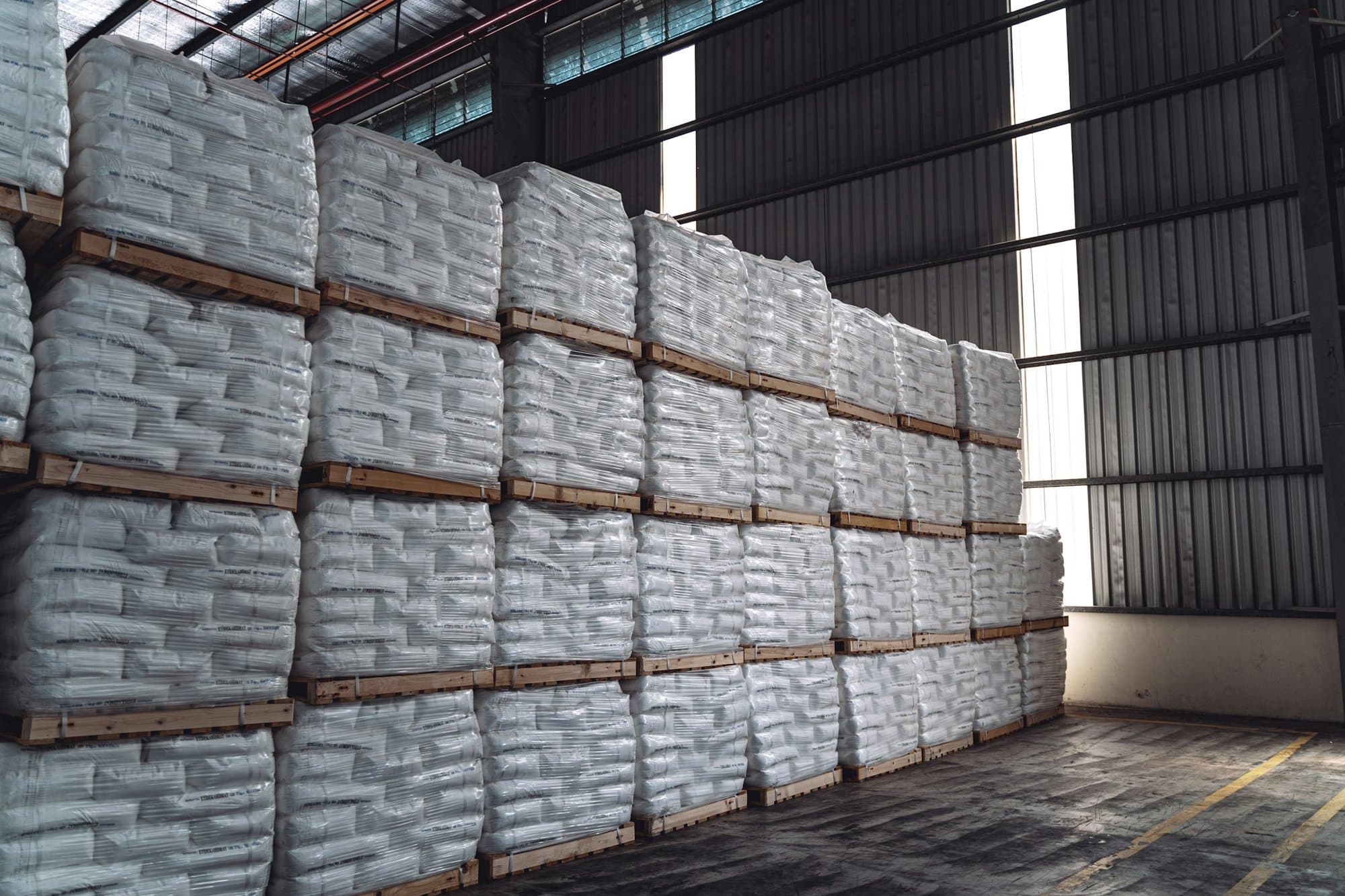
A spice importer in Gdańsk takes delivery of a 20ft container of black pepper on a January morning. The box spent the night on the quay at minus five, and the driver backs it into a heated warehouse and opens the doors at once. By lunchtime the 25 kg bags on the outside of the stack feel damp. They go into the racks anyway, one row against the outside wall. In April that row smells musty. The insurer asks for photos taken when the doors opened, and for the notice sent to the shipping line. There are neither.
Nuts, coffee, spices and dried fruit keep when they stay drier than the surrounding air can make them. In practice: ship at or below the contract moisture, keep warehouse air under about 65 to 70% relative humidity and well clear of 75%, where mould starts, hold nuts at 0 to 10°C where you can, store on pallets away from walls, keep spices apart from nuts and coffee, and sell the oldest lot first. At the port, let a cold container warm up before opening it, and photograph everything before the first bag moves.
Illustration
Read the moisture line as a humidity number
A dry product trades water with the surrounding air until the two balance. Water activity (aw) tells you where that balance sits: the US FDA defines it as the equilibrium relative humidity divided by 100. A product at aw 0.65 is in balance with air at 65% relative humidity. Damper air adds water to it, drier air slowly draws water out.
On our catalog the soft dried mango slices have a water activity of up to 0.65 and the low sugar slices up to 0.60. Moulds and yeasts have a lower limit of about 0.61, according to Kansas State University. The soft grade sits just above that floor and keeps because of its sugar and packing. In air above 65% it takes up water and drifts further toward mould.
The German insurers' Transport Information Service (TIS) puts the mould threshold for hygroscopic cargo at 75% relative humidity. Cold goods are in balance with drier air at the same water content, so cooler storage leaves more room before that line.
The numbers, product by product
Moisture and packs come from our catalog, climate from TIS. TIS has no dried mango page, so figures for sultanas, another sugar-rich dried fruit, stand in.
| Product | Moisture, maximum (our catalog) | Export pack (our catalog) | Temperature (TIS) | Relative humidity (TIS) |
|---|---|---|---|---|
| Cashew kernels | 5% on W180 to W450, 4.5% on LBW320, 4.7% on splits and pieces | Vacuum PE bag 10 kg or 11.34 kg, carton of 2 x 11.34 kg vacuum bags (22.68 kg), tin can 10 kg | 5-25°C | 70% |
| Black pepper | 13.5% G500, 13% G550, 12.5% G570 | PP bag 25 kg | 5-25°C | 50-60% |
| Robusta coffee | 12.5% S18 and S16, 13% S13 | Jute bag 60 kg | 10-20°C | 50-65% |
| Vietnamese cassia | 13.5% on cassia stick 8 cm | Carton 10 kg | 15-19°C | 60-70% |
| Dried mango | 18% soft slices, 16% low sugar slices | Carton 10 kg, or carton 6 kg (40 bags of 150 g) | 4-20°C (sultanas) | 60-70% (sultanas) |
For soft dried fruit, fruit balls and dried jackfruit, moisture and water activity are agreed per order. Ask for both in your quote request and we confirm them for your lot.
For storage, the Codex code on aflatoxin in tree nuts asks for under 70% relative humidity and, where possible, 0 to 10°C. The AFI cashew specification quotes 0 to 10°C with 55 to 70%. The Codex code on ochratoxin A in coffee gives the edges: below 60% the beans keep drying, above 80% they take up water.
In the container: where the rain comes from
On a long voyage the sun heats the container roof by day and the cargo, cartons and floor give off vapour. At night it condenses on the cooling roof and drips onto the top tier, night after night. The packing and container guide covers it for cashews. Cargo sweat is the reverse: cold goods meet warm, damp air at the end of the trip, as in Gdańsk. The GDV Container Handbook says not to open a container immediately at destination, so the cargo can adjust to the local temperature.
| Measure | What it does | Its limit |
|---|---|---|
| Cargo at or below the contract moisture | Less water in the box to begin with | The only measure that removes the source |
| Paper or cardboard on the floor, sides and top of the stow | Catches the first drips, as TIS and Codex advise for coffee | Once saturated, it lets water through |
| Desiccant bags or poles | Take vapour out of the air | Must hang high, clear of the goods, and can saturate before the critical days |
| Free vents, ventilated containers for coffee | Break up the wet layer under the roof | Ventilated boxes are a booking choice |
| Stowage below deck | Smaller swings between day and night | Requested through your forwarder |
AFI wants cashews packed without internal paper liners, so paper goes on the container walls, not in the carton. Write extras such as a lining, desiccants or a humidity logger into the contract.
Vacuum and gas-flushed cashew packs
Cashew kernels are 45 to 50% oil, which TIS links to their rancidity risk, and oxygen drives the reaction. Every cashew pack on our catalog is sealed: vacuum bags, cartons of two vacuum bags, and tins. AFI asks for a hermetic seal and, for gas-flushed packs, food-grade CO2 at 60% minimum with the balance nitrogen. If you want flushed tins, say so in your quote request and we confirm the gas mix for your lot.
The risk with vacuum is what AFI calls blocking: kernels bonding together under high moisture and high vacuum. Strong blocking, which cannot be broken without a tool, is not allowed. AFI's suggested remedy is about 21 days frozen, then about 5 days tempering in cold storage.
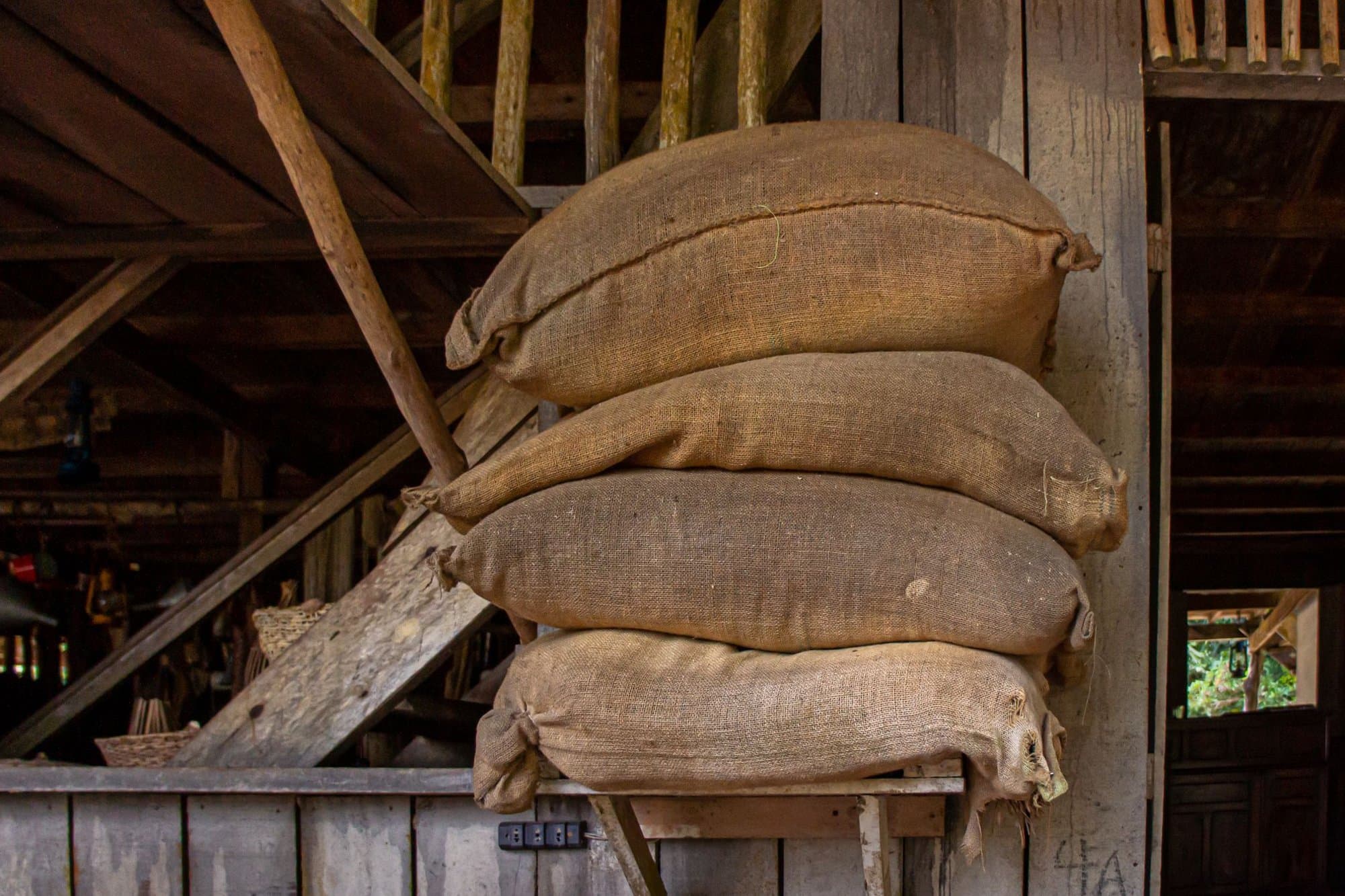
A good vacuum bag is as hard as a brick, and a soft one has lost its seal. Pepper in PP bags and coffee in jute bags have no seal at all, so they take on the warehouse air directly.
Insects and fumigation, in general terms
AFI allows no live infestation in cashews and prohibits methyl bromide, naphthalene and any chemical that risks food safety or taints the taste. Codex suggests fumigating nuts as they leave storage for export, and TIS notes that a fumigation certificate may travel with the documents.
In storage, TIS calls sultanas very frequently infested (moths, mites, beetles), and the Codex coffee code asks for coffee weevil checks through integrated pest management. If live insects appear in two or more cartons of cashews, AFI's remedy is to freeze the shipment at -18°C for at least 21 days.
Fumigant can still be in the box when it arrives. A container fumigated in transit and not ventilated before loading falls under the IMDG Code and should carry a warning sign. Svedberg and Johanson cite an Australian survey that found residual chemicals in 74 of 76 containers, and report that signs are often missing. Measure every incoming container and ventilate it before anyone walks in.
The warehouse: five rules
- Keep it cool and steady: nuts at 0 to 10°C where you can, the rest within the TIS ranges. Codex warns that sun and heaters create temperature differences that move water through a lot.
- Keep the air dry. Hang a hygrometer at the stack, not in the office. Aim under 65 to 70% and treat 75% as an alarm.
- Keep pallets off the floor and away from the walls. Both Codex codes ask for pallets placed so air can move. The Gdańsk row went musty against an outside wall.
- Store spices apart. TIS asks for spices to be stowed separately from each other and away from odour-absorbing foods such as coffee, and cashews are sensitive to pungent smells.
- Dispatch first in, first out, by lot. AFI asks for lot or production codes on every cashew carton and the packing list. Rotate by those codes, not arrival date, and record each lot's condition and age on receipt, as the Codex coffee code asks. AFI considers 24 months reasonable for cashews kept properly, TIS gives pepper up to 24 months and sultanas 12 at most.
Unloading day: what trouble looks like and what to record
| What you see or smell | Usual cause | What to record |
|---|---|---|
| Drops on the ceiling, stained top tier | Container rain | Photos before anything moves, stained cartons by lot code |
| Wet cartons at the floor or doors | A leak or outside water | Door gaskets, and daylight through the roof with doors closed |
| Musty smell as the doors open | Mould | Time, photos, samples from the nearest bags |
| Stale, paint-like smell or taste in cashews | Rancidity | Lab test for free fatty acids and peroxide value (AFI maxima: 1.5% and 5 meq/kg) |
| Dried fruit or fruit balls stuck in blocks | Heat and pressure, or damp | Photos of an opened pack and its carton |
| Soft vacuum bags, kernels fused in a lump | Lost seal, or blocking | Count of bags, photos |
| Live insects, webbing, droppings | Infestation | Photos, sealed samples, the lot set apart |
Before the seal is cut, photograph the container number, the seal number beside the bill of lading, and the outside of the box. Then compare the cargo with your sealed reference sample, as the sample check guide explains.
Under the Hague-Visby Rules, written notice of loss or damage goes to the carrier when the goods are removed, or within three days if the damage is not apparent. Without it, removal counts as evidence that the cargo arrived as the bill of lading describes. Call your insurer's surveyor before damaged goods are moved. As the Incoterms guide explains, even Institute Cargo Clauses (A) exclude loss caused by the nature of the goods, so mould from cargo shipped too wet is usually not covered.
Send the same file to us through the contact page, and we handle the claim with you.
Frequently asked questions
At what temperature and humidity should cashew kernels be stored?
At 0 to 10°C and 55 to 70% relative humidity, the optimum AFI quotes for tree nuts, with vacuum bags kept sealed until use.
How long do cashew kernels keep?
AFI considers 24 months reasonable under proper storage. On older lots, test free fatty acids and peroxide value before selling.
Can pepper and cashews share a warehouse?
Yes, in separate zones. TIS asks for spices to be stowed apart from each other and from foods that pick up smells, coffee included.
Do desiccant bags stop container rain?
They reduce it. The GDV Container Handbook says they must hang high and can saturate early, so use them with dry cargo and a paper cover.
How soon must I report cargo damage to the shipping line?
Under the Hague-Visby Rules, in writing when the goods are removed, or within three days if the damage is not apparent. Check which rules your bill of lading uses.
Sources
- Association of Food Industries (AFI), Specifications for Cashew Kernels (hermetic packing without internal paper liners, CO2 and nitrogen flushing, prohibited chemicals, carton lot codes, blocking, free fatty acids and peroxide value, 24-month storage life, 0 to 10°C and 55 to 70% humidity, freezing remedies)
- Codex Alimentarius, Code of Practice for the Prevention and Reduction of Aflatoxin Contamination in Tree Nuts, CAC/RCP 59-2005 (storage below 70% humidity and at 0 to 10°C, pallets, fumigation before export)
- Codex Alimentarius, Code of Practice for the Prevention and Reduction of Ochratoxin A Contamination in Coffee, CAC/RCP 69-2009 (60% and 80% humidity edges, sun and heating sources, pallets away from walls, coffee weevil, recording stocks, cardboard or silica gel cover, free vents)
- Transport Information Service (TIS, GDV), Cashew nuts (travel temperature, humidity, oil content and rancidity, odour sensitivity, fumigation certificate)
- Transport Information Service (TIS, GDV), Pepper (travel temperature, humidity, storage up to 24 months, separate stowage of spices)
- Transport Information Service (TIS, GDV), Coffee (travel temperature, humidity, paper lining of the container, ventilated containers)
- Transport Information Service (TIS, GDV), Cinnamon and cassia (travel temperature, humidity, stowage away from odour-absorbing foods)
- Transport Information Service (TIS, GDV), Sultanas (travel temperature, humidity, 12-month storage, caking under heat and pressure, insects)
- Transport Information Service (TIS, GDV), Hygroscopicity and sorption behaviour (75% mould growth threshold, temperature and equilibrium humidity)
- Container Handbook (GDV), 10.3.5.1 Formation of container sweat in radiation weather
- Container Handbook (GDV), 10.3.6.4 Formation of cargo sweat on a voyage into the tropics (do not open the container immediately)
- Container Handbook (GDV), 10.3.7 Loss prevention measures for avoiding moisture damage (paper dunnage, desiccants, ventilated containers, stowage below deck)
- Institute Cargo Clauses (A) 1/1/09, clauses 4.3 and 4.4 (exclusions for unsuitable packing, including stowage in a container, and for inherent vice or the nature of the goods), copy hosted by Aceris Law
- US FDA, Inspection Technical Guide: Water activity (aw) in foods (water activity equals equilibrium relative humidity divided by 100)
- Kansas State University Research and Extension, Water activity of foods, MF3674 (lower limit of about 0.61 for moulds and yeasts)
- Svedberg U., Johanson G., "Work Inside Ocean Freight Containers: Personal Exposure to Off-Gassing Chemicals", Annals of Occupational Hygiene, 2013 (fumigated containers under the IMDG Code, residual chemicals, measure and ventilate)
- Hague-Visby Rules, Article III rule 6 (written notice of loss or damage, three days if not apparent), as scheduled in Canada's Marine Liability Act